
 Vietnam
One of the best parts of visiting France is getting to enjoy its unforgettable food. With a worldwide reputation for exceptional cooking, delicious meals are easy to find wherever you go. Exploring French cuisine is also a wonderful way to connect with the country’s culture. Below are 50+ standout French dishes you should not miss.
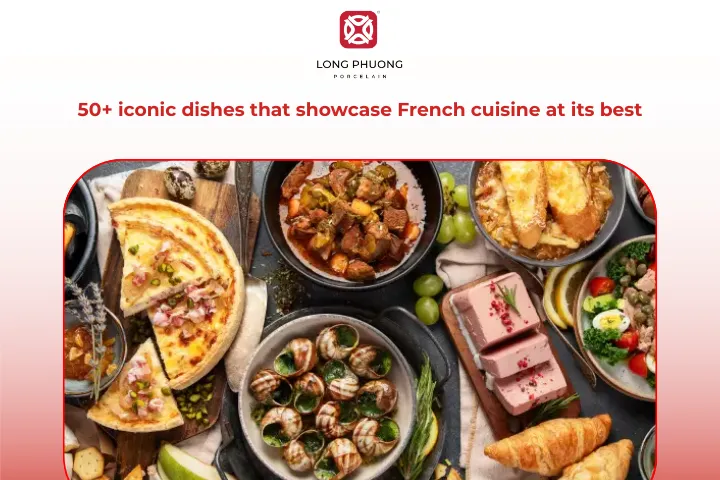
1. Understanding the basics of French cuisine
With its many cooking techniques and culinary terms, understanding the basics of French cuisine can feel intimidating at the beginning. However, as you practice and gain hands-on experience, these fundamentals become second nature. Over time, they give you the confidence and understanding needed to create flavorful dishes that people truly enjoy.
To build a strong foundation in French cuisine, focus on these key principles:
- Keep dishes simple instead of adding unnecessary elements
- Select cooking techniques that highlight the ingredients
- Use sauces to add depth and richness
- Incorporate herbs to boost aroma and flavor
- Recognize the value of careful preparation
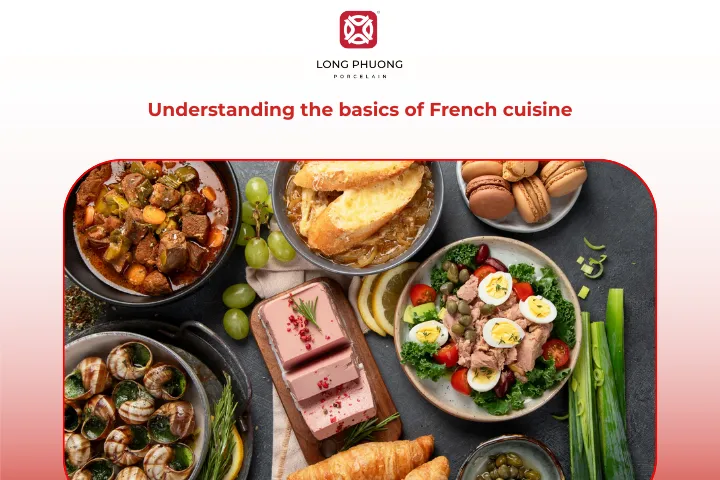
2. The philosophy behind French cuisine
French cuisine is guided by a simple yet powerful idea: let ingredients speak for themselves. Instead of overpowering flavors with heavy seasoning, French cooking focuses on enhancing what is already there. Think of it like a conversation rather than a monologue. Every component has a role, and no single voice dominates the plate.
Another core principle is technique. In French cuisine, how you cook matters just as much as what you cook. A humble carrot can taste extraordinary when sliced correctly and cooked with care. This respect for process teaches patience and discipline, values that extend far beyond the kitchen.
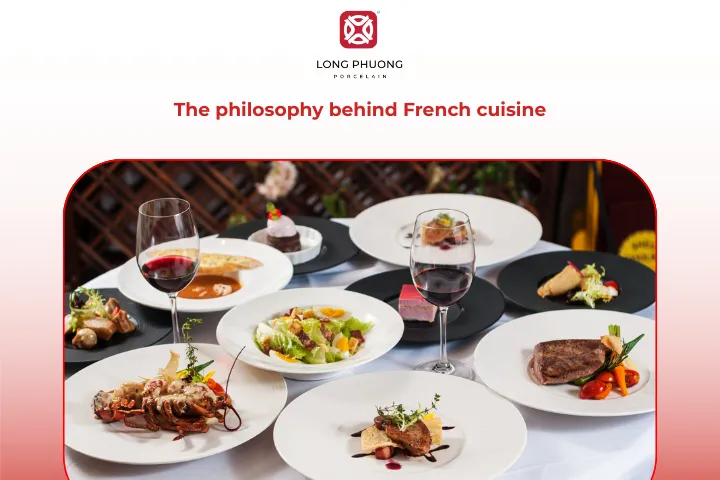
3. A brief history of French cuisine
French cuisine has a long and influential history that dates back to the 14th century. Over time, chefs began refining cooking methods and ingredients, shaping a style that would later define French food. One of the earliest figures was François Pierre La Varenne, who helped develop foundational sauces like béchamel and played a key role in setting French cuisine apart from other European traditions, especially Italian cooking, during the 1600s.
Beginning in the 18th century, renowned chefs such as Marie-Antoine Carême, Georges Auguste Escoffier, and Paul Bocuse further transformed French cooking. They formalized techniques like making roux to thicken sauces and introduced classics such as Espagnole. Their work laid the groundwork for what we now recognize as classical, regional, seasonal, and haute French cuisine.
The influence of these early masters remains strong today. Many of their techniques and recipes are still taught in culinary schools, practiced in professional kitchens, and featured in some of the most respected French cookbooks.
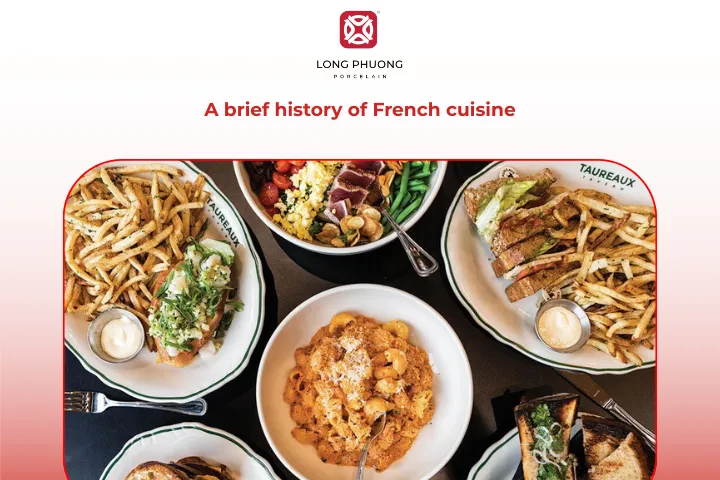
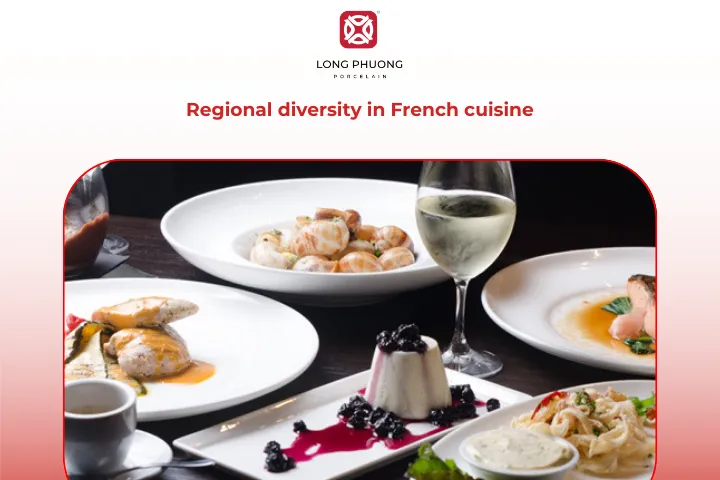
4. Regional diversity in French cuisine
French cuisine changes widely from one region to another, influenced by geography, climate, and local traditions. From creamy, butter-heavy dishes in cooler areas to lighter cooking with olive oil and herbs in warmer regions, France offers an impressive range of flavors and styles.
- Northern France: This region relies heavily on butter, with many dishes featuring apples, dairy products, and fresh seafood.
- Alsace: Strong German roots shape the food here, resulting in hearty comfort dishes like sauerkraut specialties and crisp flatbreads.
- Burgundy and Lyon: Famous for wine-centered cooking, these areas highlight braised meats, rich sauces, and top-quality poultry.
- Provence: Bright Mediterranean flavors dominate, using olive oil, tomatoes, garlic, and aromatic herbs such as thyme and rosemary.
- Southwest France: Known for bold, rustic cooking, this region showcases duck, foie gras, cassoulet, and slow-cooked classics.
Together, these regional cuisines define how French food is experienced today and continue to inspire chefs across the globe.
5. Essential ingredients in French cuisine
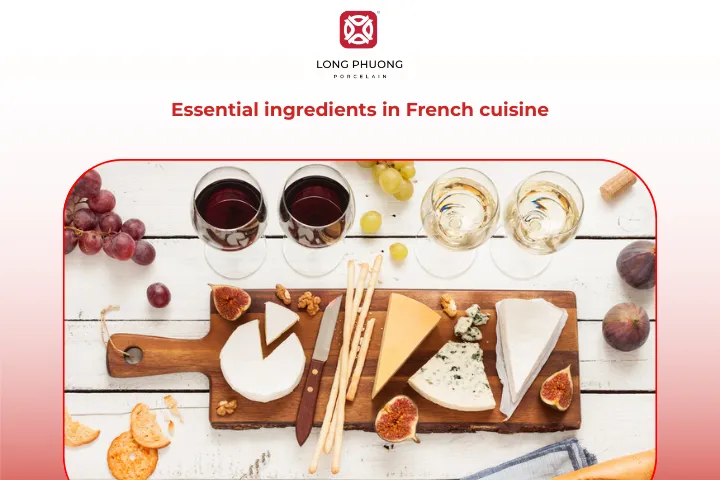
French cooking is admired for its rich flavors, careful techniques, and emphasis on quality ingredients. Many traditional dishes are built on a small set of core components that shape the character of this cuisine. Some of the most important ingredients commonly used in French cooking include:
- Herbs de Provence: a fragrant mix of thyme, rosemary, basil, and oregano, used to season meats, vegetables, and slow-cooked dishes
- Garlic: widely used to add depth and aroma to soups, sauces, and roasted meats
- Wine: both red and white varieties are used to enhance sauces, marinades, and stews with a deeper flavor
- Shallots: mild, slightly sweet onions often used as a base for sauces and vinaigrettes
- Butter: essential in French cooking and baking, adding richness and a smooth texture to dishes
- Crème fraîche: a thick, lightly tangy cream commonly used in sauces, soups, and desserts
- Dijon mustard: a kitchen staple for dressings, sauces, and marinades, known for its sharp taste
- Fresh bread: baguettes and other breads are a daily part of meals, often served with butter, cheese, or pâté
- Cheese: France produces many famous cheeses, such as Brie, Camembert, and Roquefort, enjoyed both in cooking and on their own
- Truffles: highly valued for their strong, earthy aroma, mainly used in fine dining dishes
- Olive oil: commonly used for cooking, salad dressings, and finishing dishes
- Bouquet garni: a tied bundle of herbs, usually thyme, parsley, and bay leaf, used to gently flavor soups, stews, and stocks
- Lemon: both juice and zest are used to brighten and balance flavors in many recipes
6. 50+ classic dishes that define French cooking
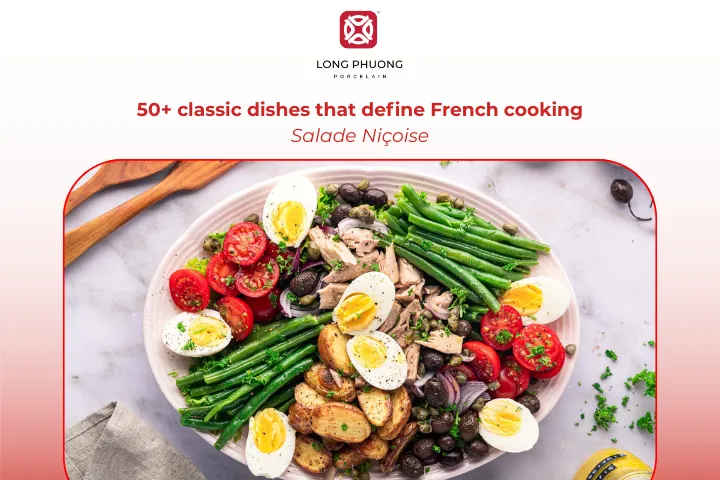
6.1. A surprising French food: Salade Niçoise
From the Mediterranean city of Nice, this composed salad brings together tomatoes, olives, hard-cooked eggs, tuna or anchovies, and olive oil. Its vibrant combination of fresh ingredients has made it a beloved representation of coastal French cuisine.
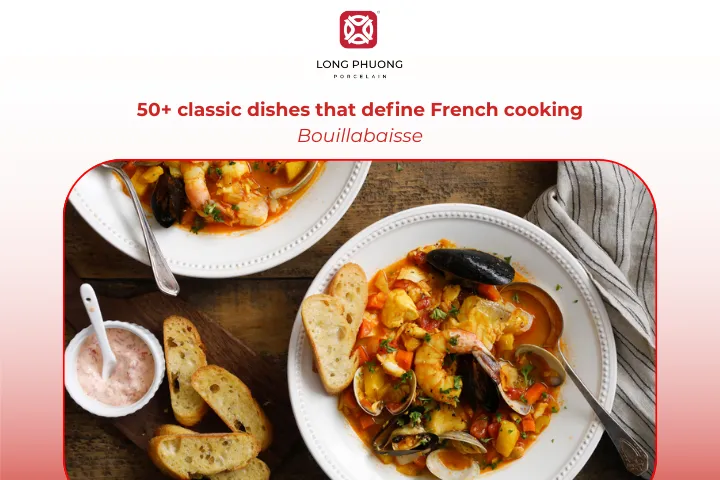
6.2. Bouillabaisse
Bouillabaisse is a classic fish stew from Marseille and a proud part of French cuisine. It is made with mixed Mediterranean fish simmered in a fragrant broth with herbs, garlic, and olive oil. Served with bread and rouille, Bouillabaisse reflects the coastal character and communal spirit of southern France.
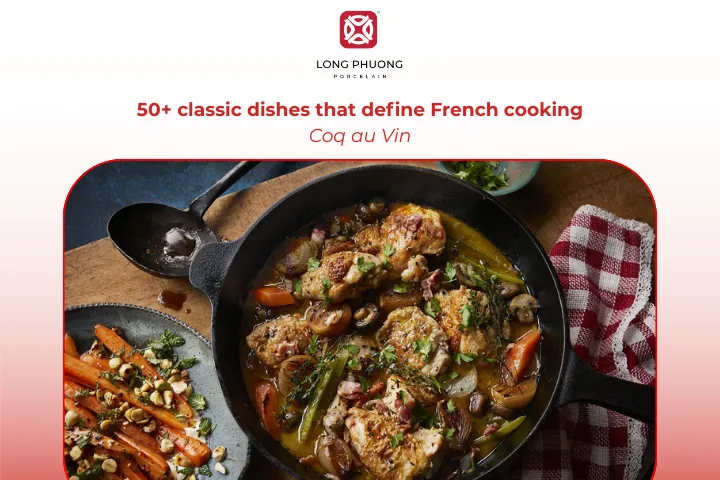
6.3. A classic French dish: Coq au Vin
Any meat stew made with plenty of wine usually turns out delicious, and Coq au Vin is no exception. With golden-browned chicken, crispy bacon lardons, and a rich, buttery sauce, this dish has earned its place as a favorite in French cuisine.
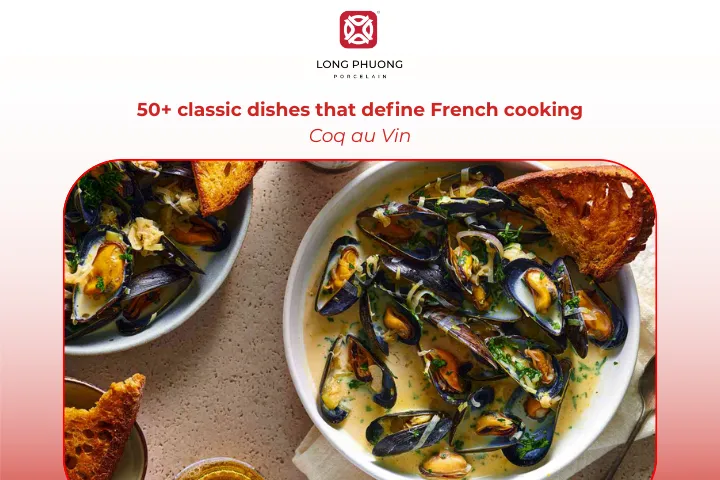
6.4. Moules mariniere
One of the most memorable French dishes is a steaming pot of mussels, or moules, served with a side of crispy fries. Typically cooked in a broth of white wine, shallots, garlic, parsley, and sometimes cream, mussels are simple to prepare and can be found fresh at markets across France.
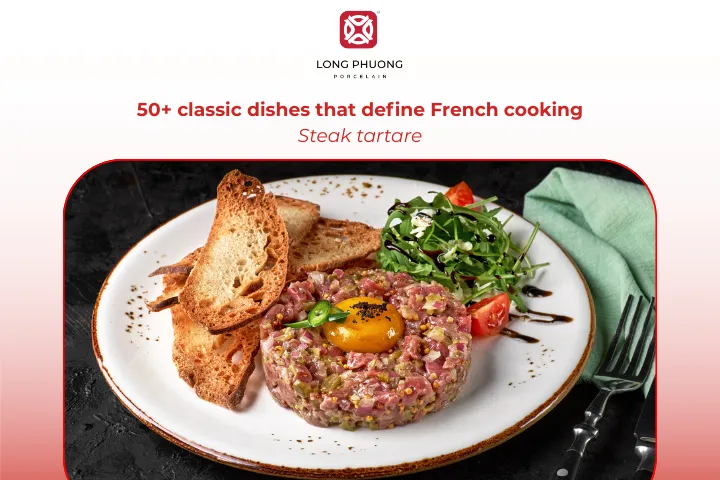
6.5. French Food: Steak tartare
Steak tartare is a well-known French dish, made of raw, finely chopped beef served on a plate with French fries. The key to its appeal is the quality of the meat and the flavorful mix of onions, capers, mustard, Worcestershire sauce, and often a raw egg yolk.
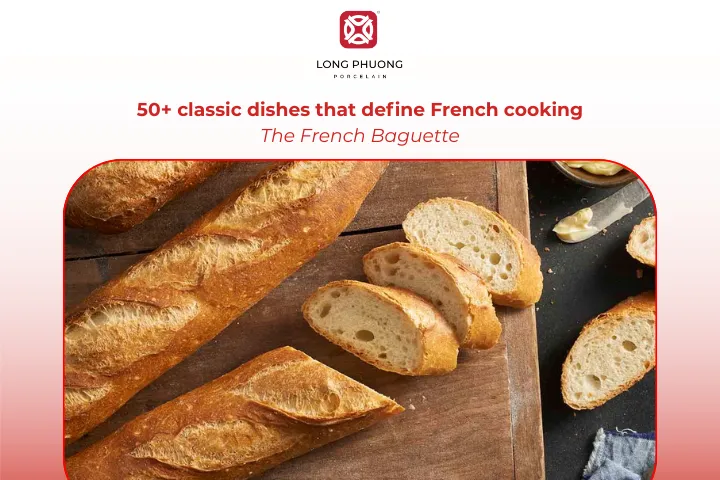
6.6. The French Baguette
A crisp, golden baguette is a symbol of French culture. One of the joys of visiting France is seeing how people carry and enjoy their baguettes in many ways, under the arm, in a bike basket, alongside cheese, or to savor every last bite on the plate.
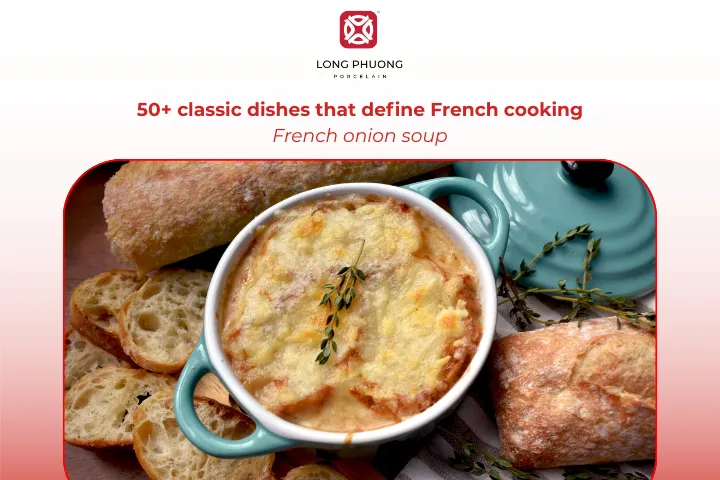
6.7. French onion soup
Often found on bistro menus, French onion soup features deeply caramelized onions simmered in a rich broth, topped with crusty, toasted bread, and melted cheese. Its comforting layers of flavor have helped it become one of the most memorable soups in French cuisine
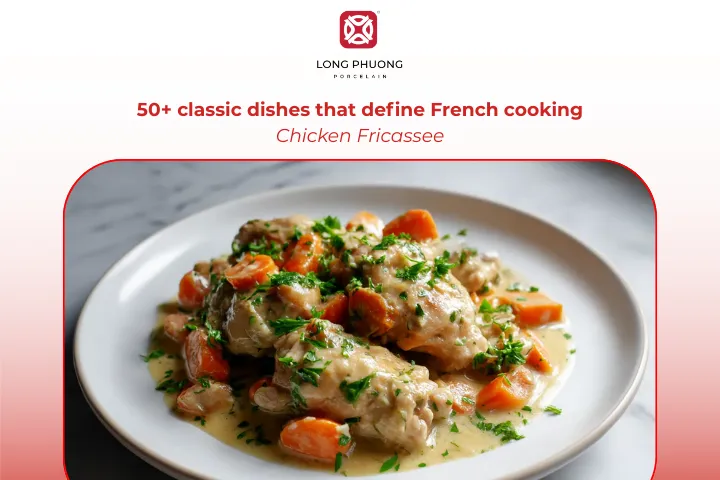
6.8. French Food: Chicken Fricassee
Tender chicken and earthy mushrooms come together in a rich, creamy sauce for a truly satisfying dish. Ideal for a special dinner or a comforting meal at home, it pairs perfectly with mashed potatoes or rice to soak up every bit of the sauce.
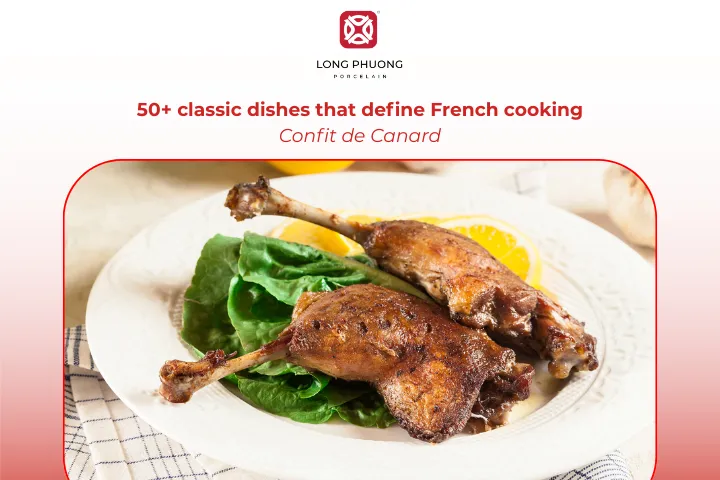
6.9. Confit de Canard (Duck Confit)
Hailing from southwest France, Confit de Canard is a classic of French cuisine and absolutely delicious. The dish is made by slowly cooking duck legs in their own fat, which makes the meat incredibly tender and full of flavor. This method also helped preserve the duck for longer periods.
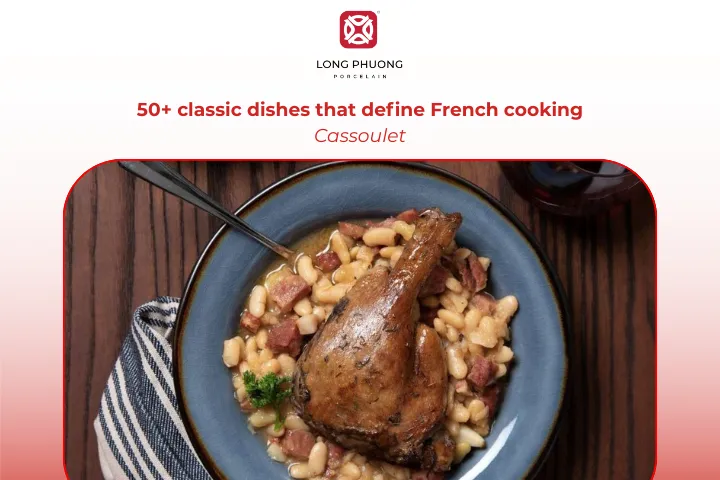
6.10. Cassoulet
Originating in the south of France, Cassoulet is a slow-cooked bean stew often containing duck, pork, and sausages. This rustic dish reflects the hearty, communal style of cooking that characterizes many regional French classics.
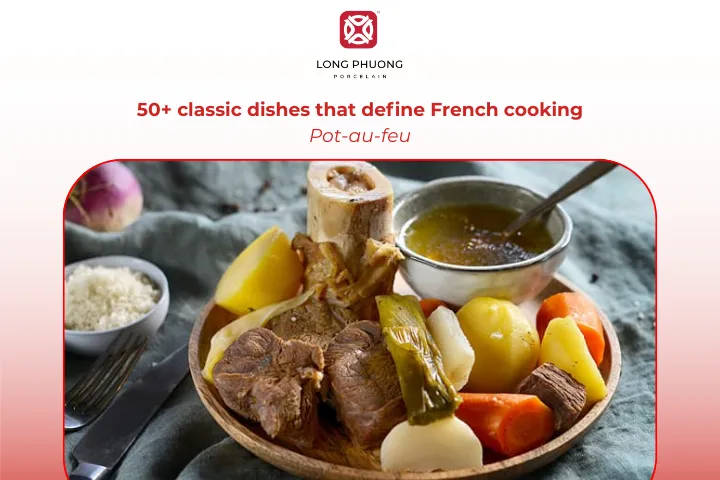
6.11. Pot-au-feu
A quintessential French stew, Pot-au-feu is a slow simmer of meat and vegetables that’s both comforting and deeply flavorful. Considered by many to be a national dish, it’s an excellent example of French cooking that celebrates simple ingredients cooked with patience.
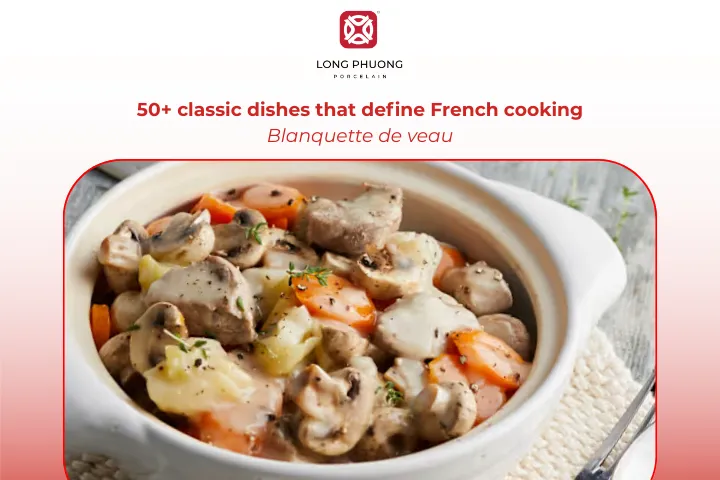
6.12. Blanquette de veau
This classic creamy veal stew is simmered gently in a white sauce and enriched with cream and egg yolk for a silky texture. It’s a beloved comfort dish that highlights the French talent for elegant, subtle flavors.
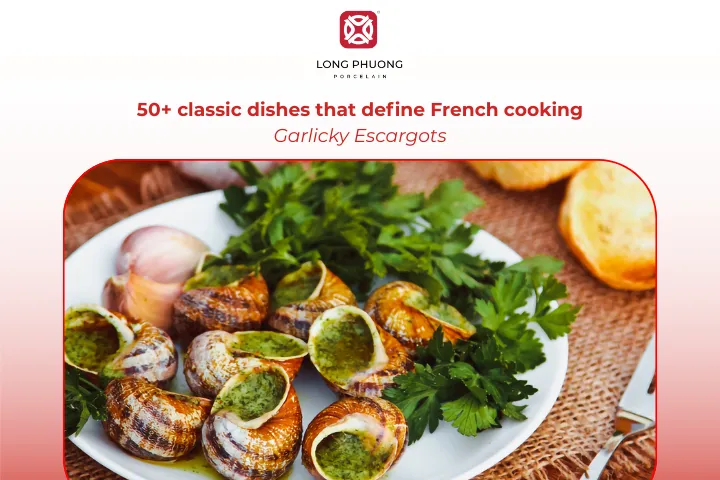
6.13. A scrumptious French food: Garlicky Escargots
Escargots, or snails, are a must-try at least once in your life. Served in a special dish with tongs and a small two-pronged fork, they offer a true French culinary experience. After removing the meat from the shell, enjoy it in one bite. The combination of snails, garlicky butter, and parsley is rich, flavorful, and unmistakably French.
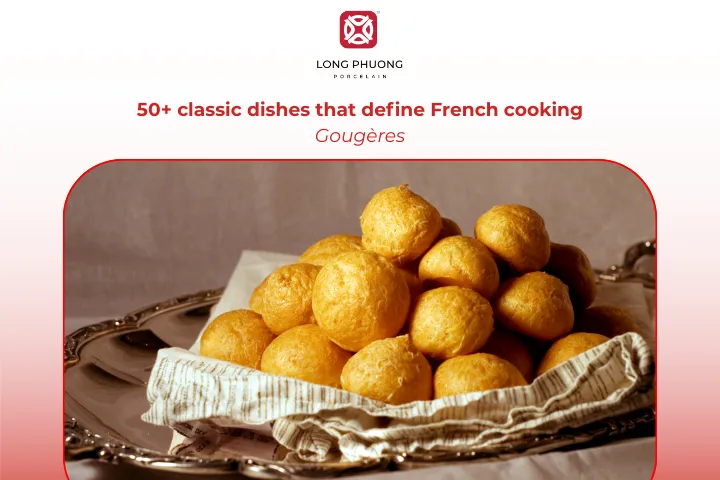
6.14. Gougères
Gougères, which come from Burgundy, are classic French appetizers made from savory choux pastry mixed with cheese. They’re commonly served at apéros across France and are a great way to use up leftover cheese. These irresistible little bites are perfect for parties.
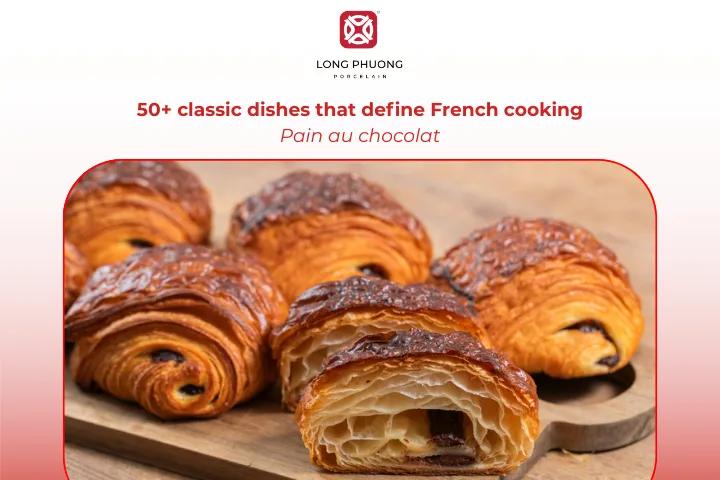
6.15. Pain au chocolat
Pain au chocolat is a beloved pastry featuring buttery dough wrapped around dark chocolate. It is slightly richer than a croissant and especially popular among children and pastry lovers. It is commonly enjoyed as a morning or afternoon snack.
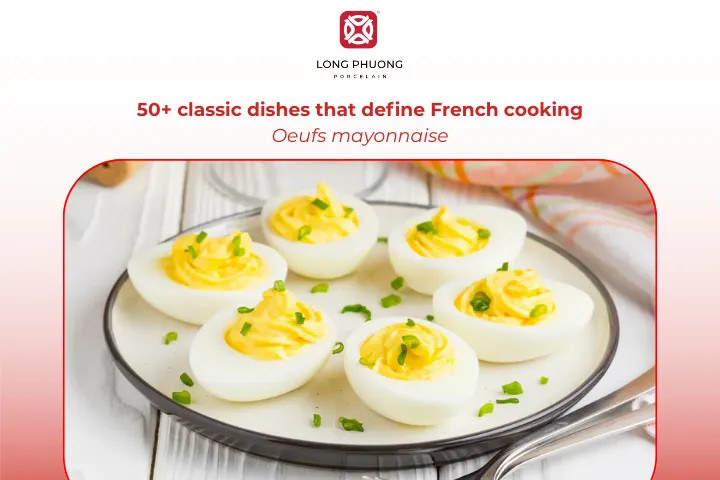
6.16. Oeufs mayonnaise
Oeufs mayonnaise stands out because of its homemade mayonnaise. The combination of creamy mayonnaise over perfectly hard-boiled eggs is simple but absolutely delicious. It is often enjoyed as a starter or light lunch.
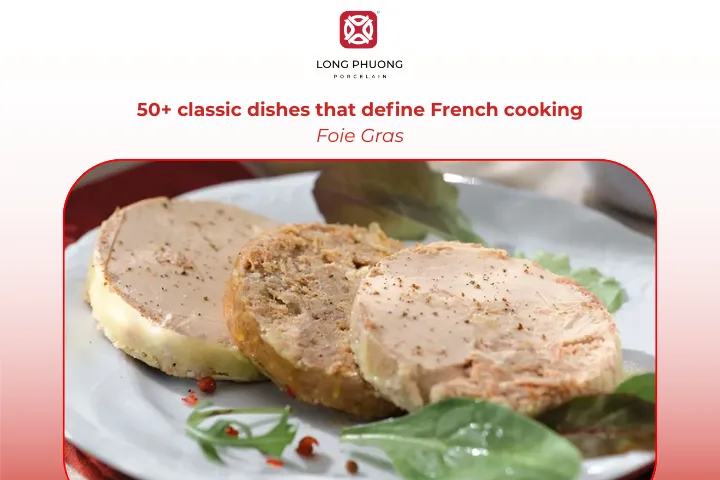
6.17. Foie Gras: A French Entrée
One of the most luxurious items on the menu and in the global culinary scene is Foie Gras. This pâté is made from specially fattened goose liver. Once prepared, it has a delicate flavor, a light richness, and a silky smooth texture without being heavy.
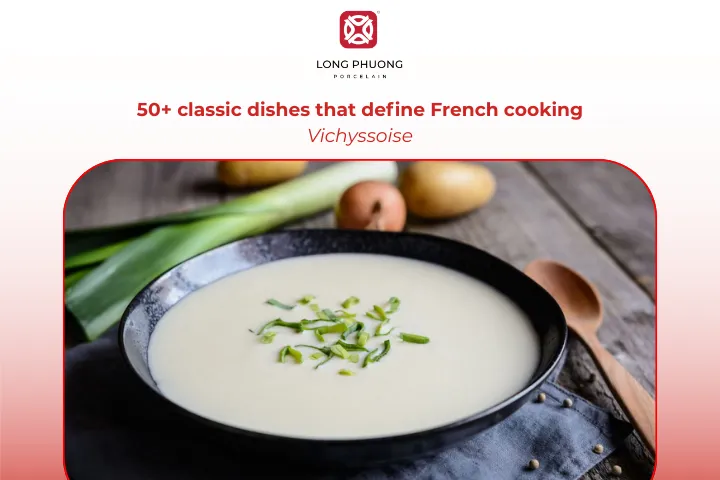
6.18. Vichyssoise
Sweet, buttery sautéed leeks blend with starchy potatoes and half-and-half to create a rich, velvety soup, traditionally served chilled. It’s finished with crispy garlic croutons, shaved Pecorino Romano, and a sprinkle of sliced scallions for a truly irresistible bowl.
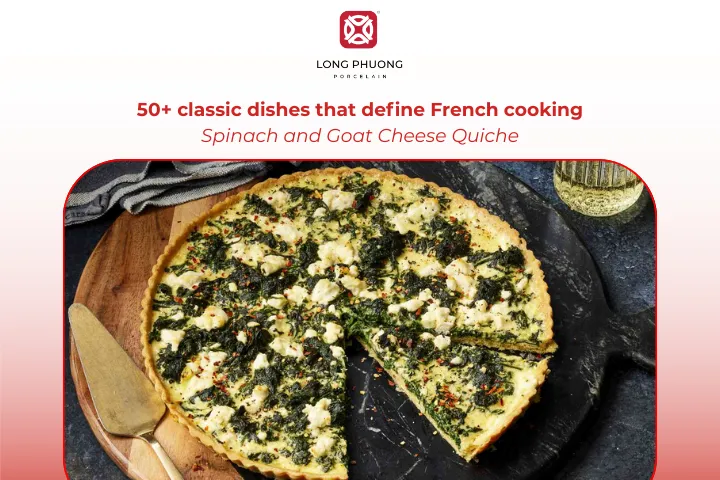
6.19. Spinach and Goat Cheese Quiche
With a rich all-butter crust, a full pound of sautéed spinach, and a whole log of crumbled goat cheese, this savory egg custard tart is a heavenly addition to any brunch table.
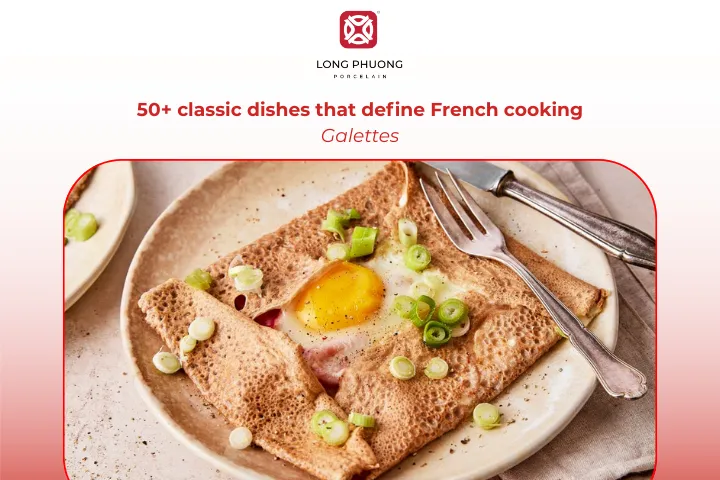
6.20. An amazing French food: Galettes
Galettes are a must-try when visiting France, especially in regions like Brittany, where they have been a traditional food for centuries. These savory buckwheat crepes are often filled with ham, cheese, eggs, or vegetables. They are best enjoyed with a glass of dry cider, another local specialty of Brittany.
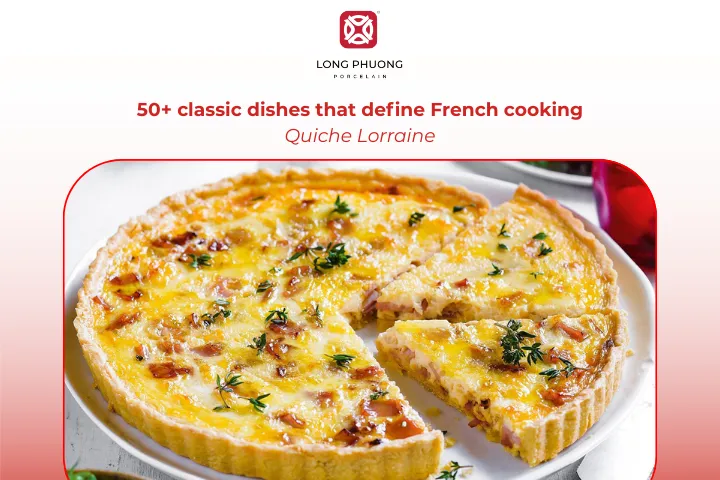
6.21. Quiche Lorraine
Quiche Lorraine is a traditional French savory tart from the Lorraine region, famous for its creamy filling of eggs, cream, bacon, and cheese baked in a flaky crust. This classic remains a favorite across France, with endless variations like spinach and goat cheese, vegetable, salmon and spinach, or, as in my version, leeks.
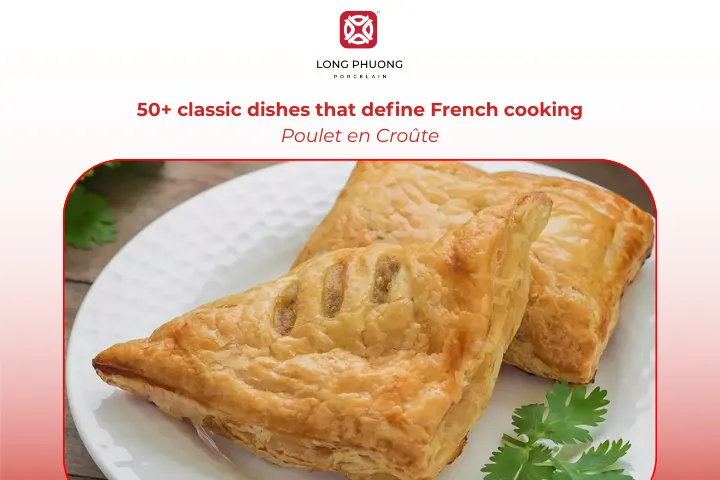
6.22. Poulet en Croûte
This chicken pot pie, inspired by a French winemaker, is a comforting one-dish meal, ideal for a chilly day or when entertaining guests. Use frozen puff pastry for a golden, flaky crust, and choose an all-butter version if you can.
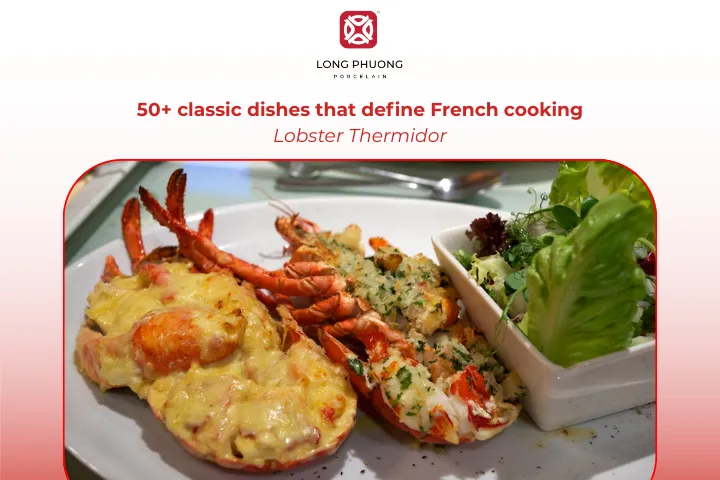
6.23. Lobster Thermidor
Earthy cremini mushrooms cooked in a wine sauce complement the natural sweetness of the lobster in this classic French dish, while Parmesan cheese creates a golden, crispy topping.
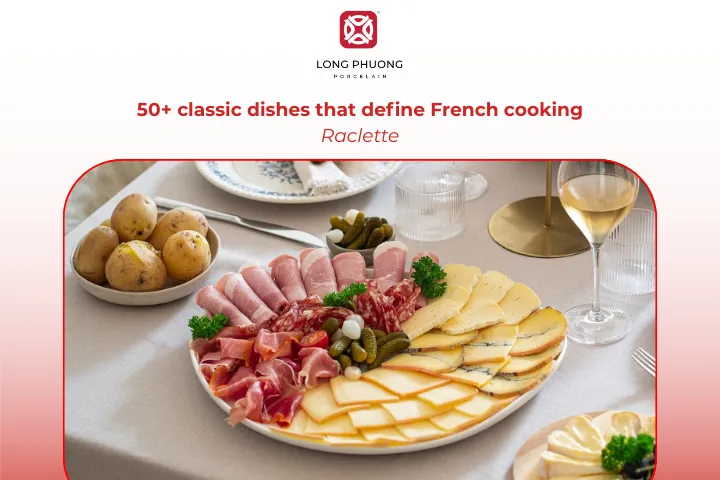
6.24. French Cuisine: Raclette
If you’re in France during the winter, raclette is a must-try. This hearty dish features melted cheese poured over meat, potatoes, and pickles. While it originally comes from Switzerland, the French eagerly enjoy it as soon as the weather turns chilly. Raclette is perfect for sharing with friends and enjoying a cozy meal together.
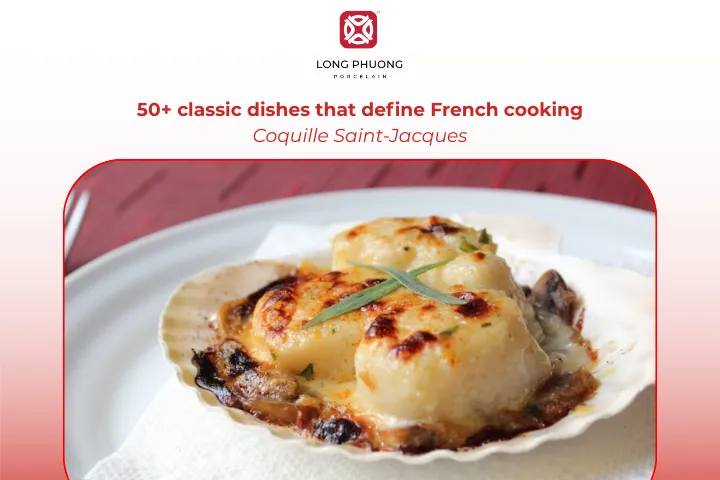
6.25. Coquille Saint-Jacques
With its long coastline, France offers an abundance of fresh seafood. One standout dish is Coquille Saint-Jacques, featuring tender scallops in a creamy sauce often made with white wine, shallots, and herbs, finished with a golden topping of breadcrumbs and cheese. Some of the best scallops come from Honfleur in Normandy, a must-visit spot when exploring this region.
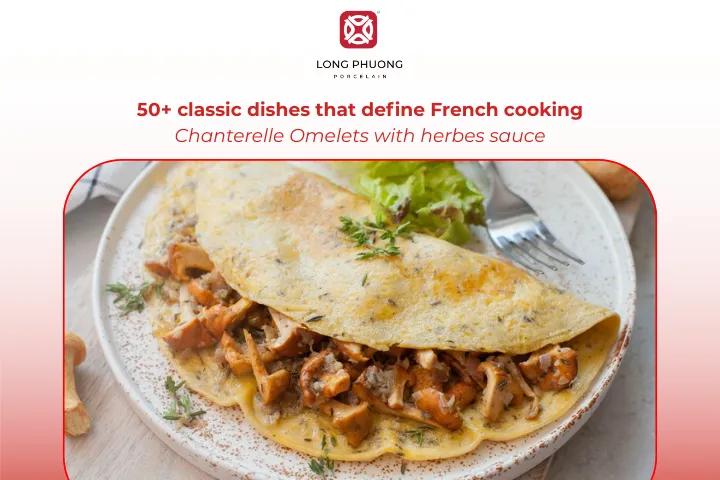
6.26. Chanterelle Omelets with herbes sauce
Chanterelle Omelets is a perfect example of elegant simplicity. The creamy chanterelle filling pairs wonderfully with a fresh herb sauce made from pureed parsley, chives, chervil, and tarragon.
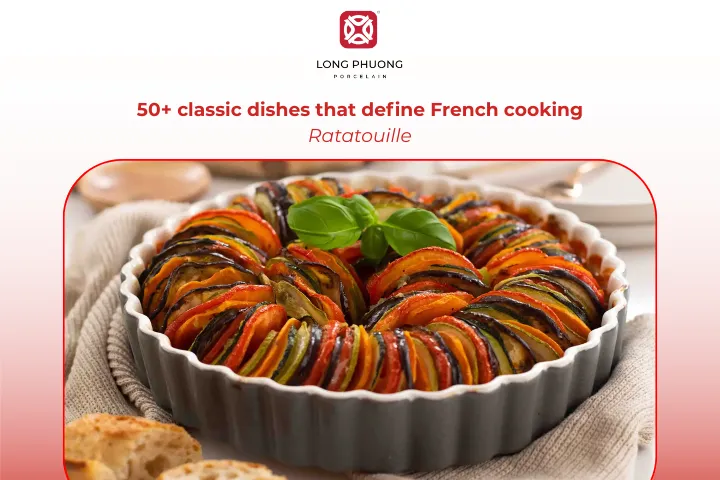
6.27. The best food in France: Ratatouille
Ratatouille is a classic vegetable dish from Provence, made with eggplant, zucchini, tomatoes, bell peppers, onions, and garlic. The vegetables are seasoned with herbs like basil, thyme, and oregano, then cooked slowly until tender. It’s a perfect summer meal, served as a side or a main, and a must-try if you’re visiting Provence.
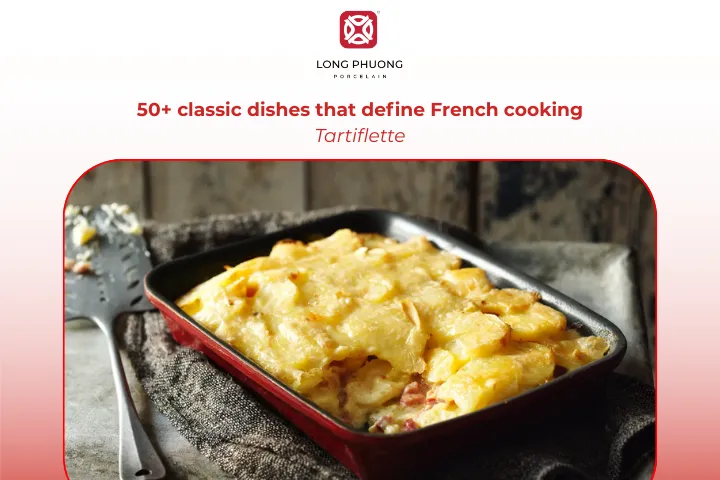
6.28. Potatoes In France: Tartiflette
Tartiflette is a French dish similar to scalloped potatoes and comes from the Savoie region in the French Alps. Thinly sliced potatoes are layered with lardons (bacon pieces) and onions, then topped with creamy reblochon cheese. It’s incredibly flavorful and comforting. At the Paris Christmas Markets, large platters of tartiflette are served, and I can’t resist enjoying it hot, paired with a glass of red wine.
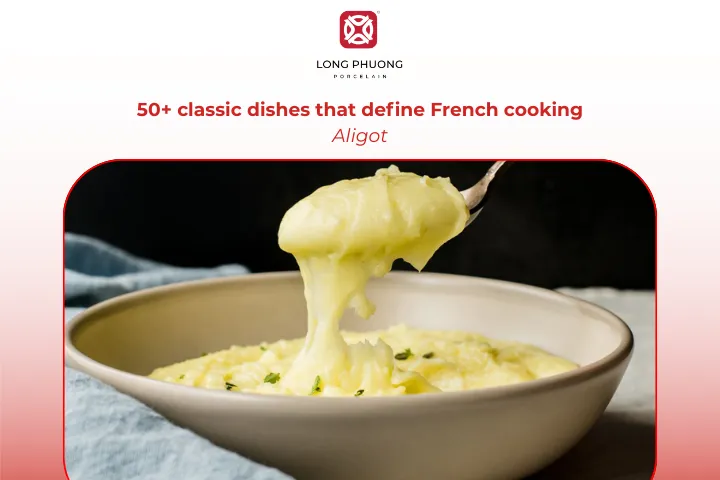
6.29. A stretchy traditional French dish: Aligot
Aligot is a traditional dish from the Aveyron region in southern France. This rich and delicious dish is made from mashed potatoes, butter, garlic, and melted cheese. Languiole cheese is most common, though Cantal or Tomme can be used. The cheese needs to become stringy when heated, giving the dish its signature stretch. The potatoes are whipped until creamy and elastic, making them a perfect side for grilled meats.
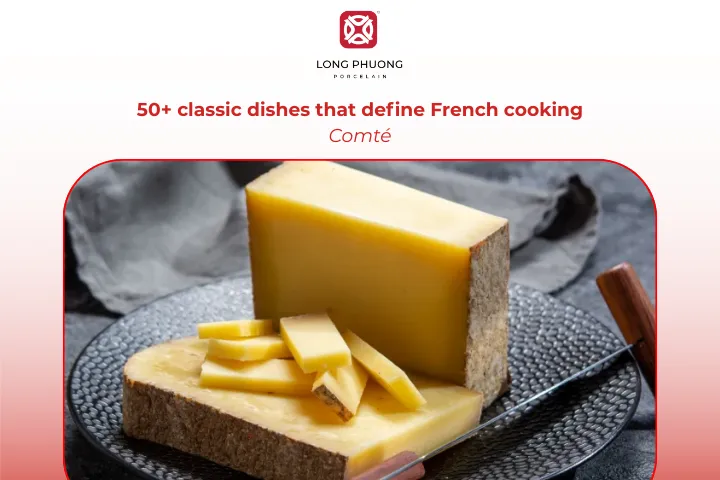
6.31. French Cheese: Comté
Comté is a famous French cheese from the Jura mountains in the Franche-Comté region near Switzerland. Made from unpasteurized cow’s milk, it has a rich and distinctive flavor. Comté is versatile, perfect for picnics, cheese boards, or melted in a fondue. Enjoy it with a crusty baguette for a true taste of France.
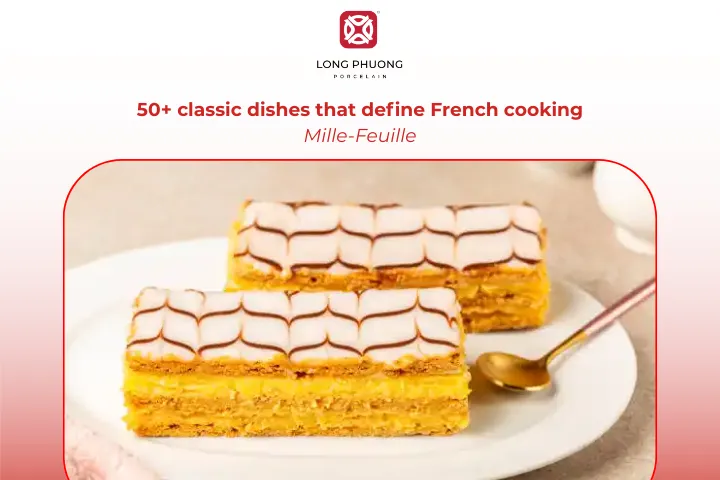
6.32. Mille-Feuille
Also called a Napoleon, this indulgent French dessert stacks layers of flaky puff pastry with rich, vanilla-speckled pastry cream, making it a buttery and irresistible treat.
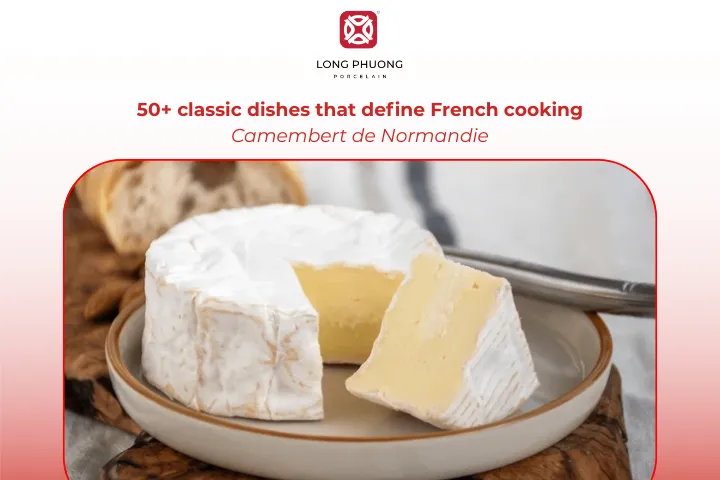
6.33. Camembert de Normandie
This beloved French cheese comes from Normandy. It is rich, creamy, and absolutely delicious, especially after sitting out of the fridge for a bit. When selecting Camembert, open the round wooden box and gently press the cheese with your thumb. If it’s soft, it’s perfectly ripe and ready to enjoy.
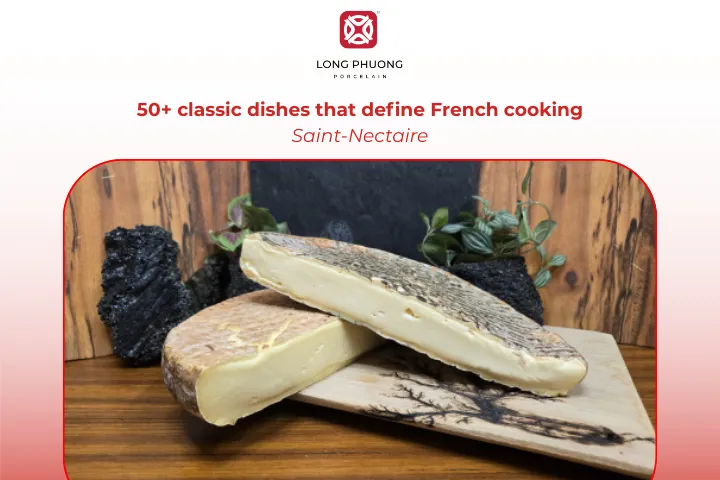
6.34. Saint-Nectaire
Saint-Nectaire comes from the Auvergne region of France. What makes it so special is that it’s made from milk of Salers cows grazing on the region’s volcanic pastures. It quickly became one of the most popular French cheeses.
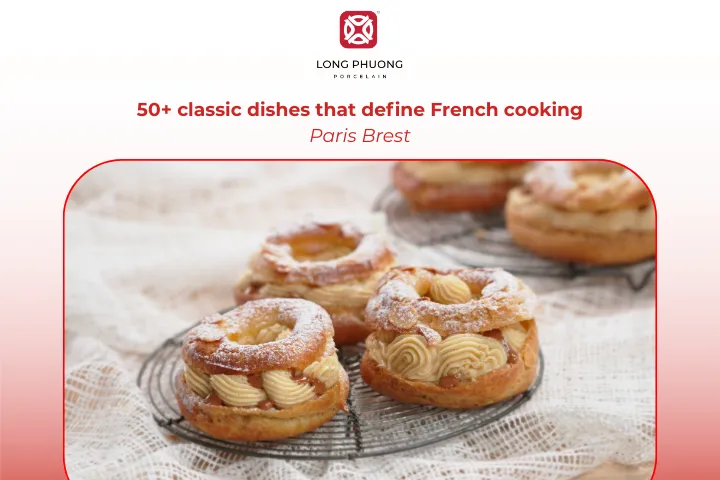
6.35. Paris Brest
Paris-Brest features a light choux pastry filled with rich praline cream that is carefully piped for an elegant look. A crisp, buttery praline layer adds texture, while sliced almonds and a dusting of powdered sugar finish it off. It is a dessert that is easy to love at first bite.
6.36. Sainte-Maure de Touraine
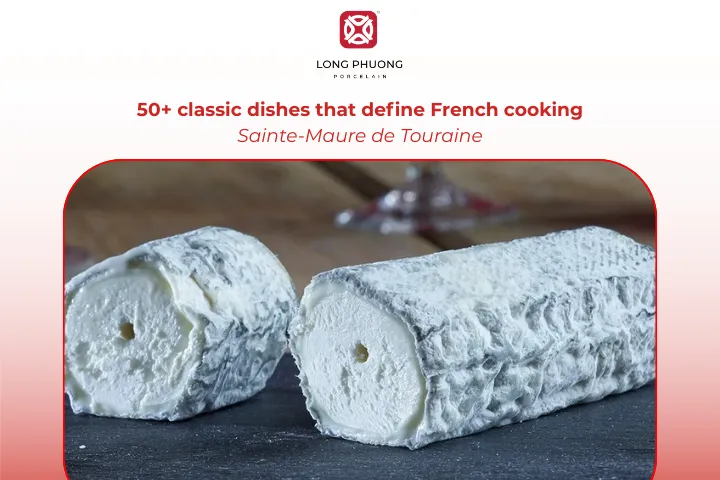
Sainte-Maure de Touraine is named after the charming town in the Loire Valley, famous for its châteaux. This cheese is long and cylindrical, with a straw running through the center and a black rind. Rolled in ash, the straw helps with air circulation during aging. It has a creamy texture and nutty flavor, making it irresistible. Pair it with a Loire Valley wine for the perfect combination.
6.37. The Cheese Platter
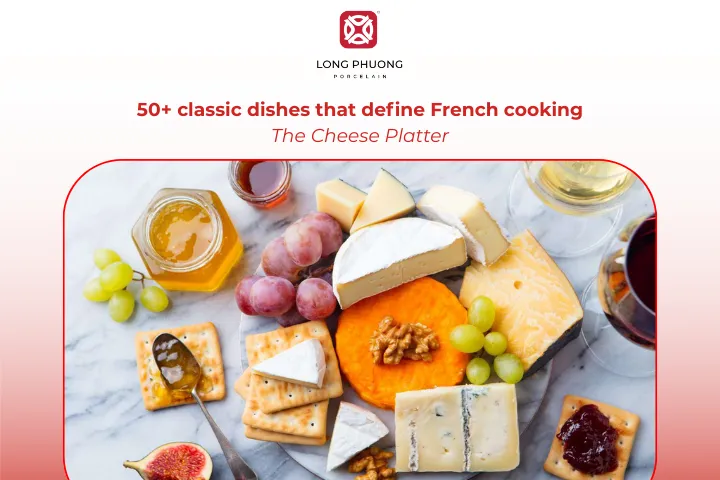
Cheese is a must-try when visiting France! In a traditional French meal, the cheese course comes after the main dish and before dessert. The typical cheese course includes a mix of textures and flavors, from soft and creamy to firm and strong.
6.38. Croque Monsieur
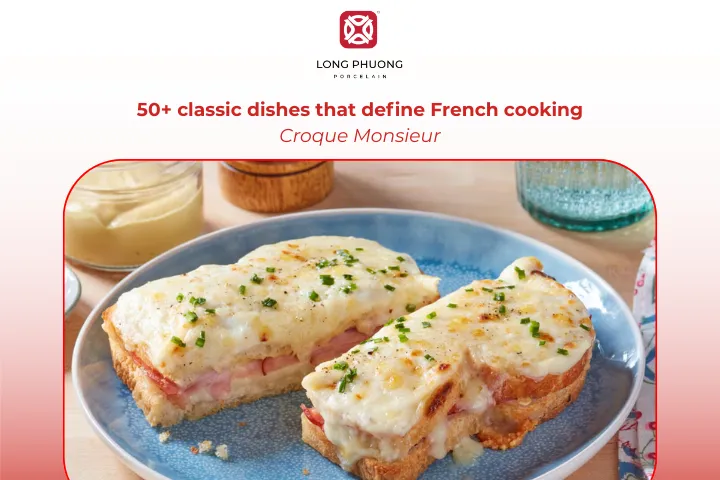
Croque Monsieur is a simple yet indulgent ham sandwich, elevated with creamy béchamel sauce. Topped with grated Gruyère or Emmental and extra béchamel, it’s definitely a French dish worth trying at least once. The Croque Madame takes it a step further by adding a poached or fried egg on top of the sandwich.
6.39. A tempting French pastry: Tarte Tatin
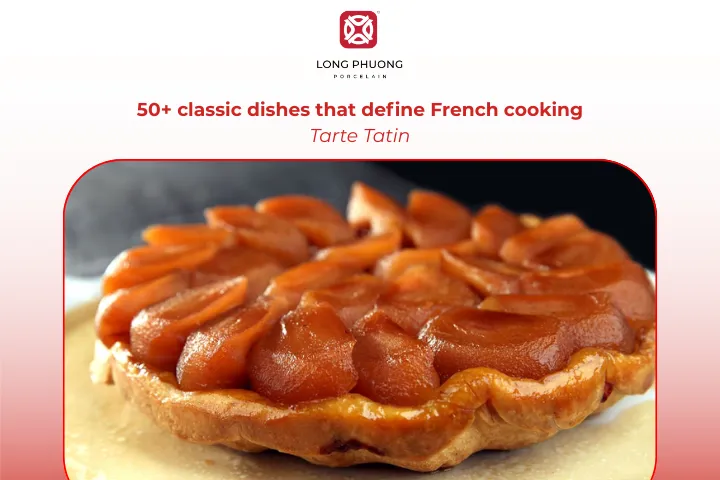
With its glossy caramelized apples resting on a rich, this classic upside-down tart is hard to resist. The fruit offers a beautiful mix of sweet and tangy flavors, creating a dessert that feels both comforting and elegant.
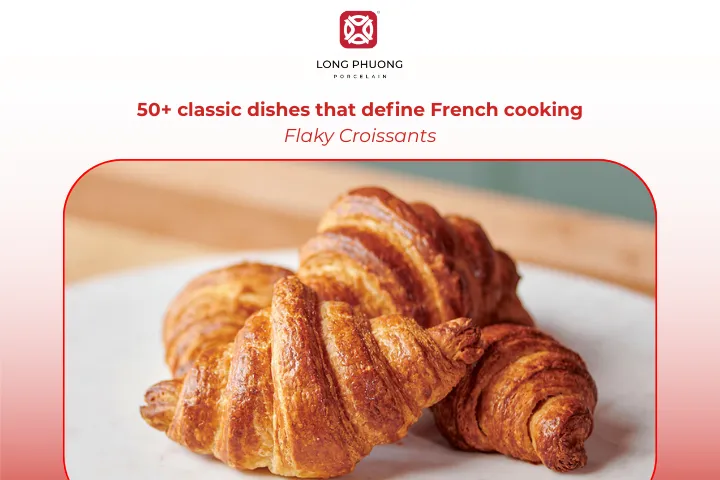
6.40. Flaky Croissants
One of the must-try foods in French cuisine is the croissant, or better yet, several of them. These pastries are cornerstones of everyday French eating. A flaky, buttery croissant often starts a day in France.
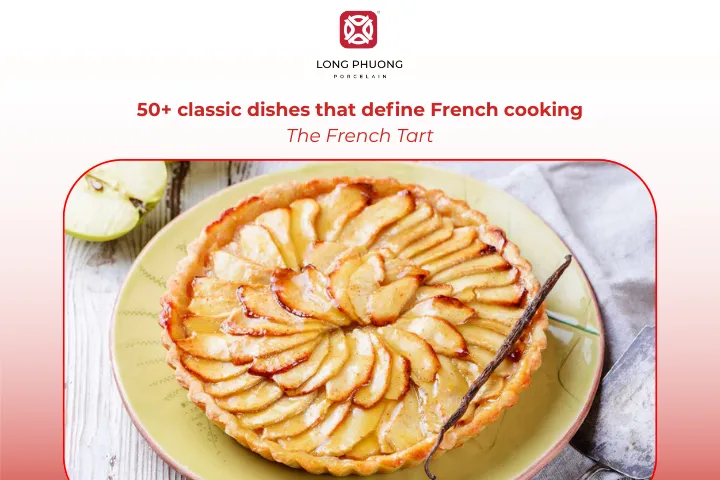
6.41. The French Tart
Fresh fruit tarts in France are hard to resist. From apricot and raspberry to quince and fig, there is no shortage of choices, especially when the fruit is in season. After tasting a few, you start to appreciate just how important a crisp, buttery crust really is.
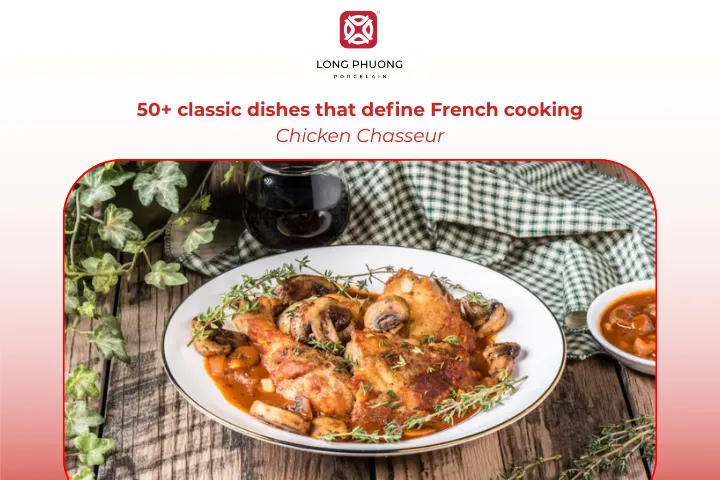
6.42. French Cuisine: Chicken Chasseur
Tender chicken pieces are lightly seasoned and browned to a golden color, then cooked in a garlicky tomato sauce with olives. Served with a crusty baguette, this dish is a flavorful braise from southern France.
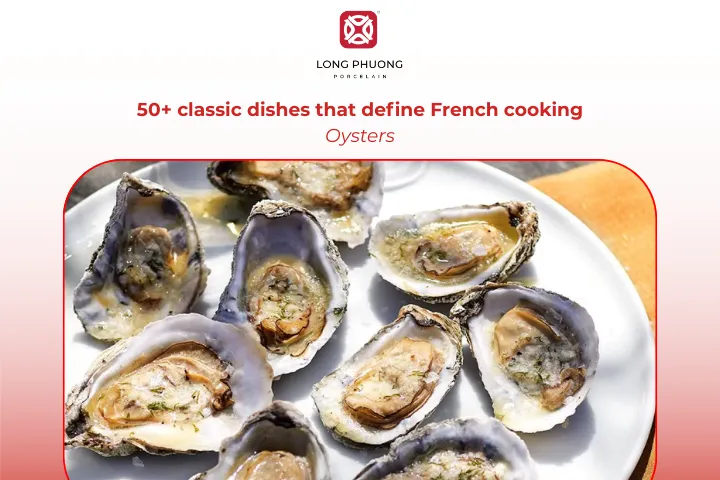
6.43. Oysters
The French love oysters, especially in December, when crates line the streets and seafood bars pop up outside cafés. At dinner parties, a platter of fresh oysters with lemon is common. Try them by tipping the shell to your lips and savoring the briny, fresh taste for the perfect French experience.
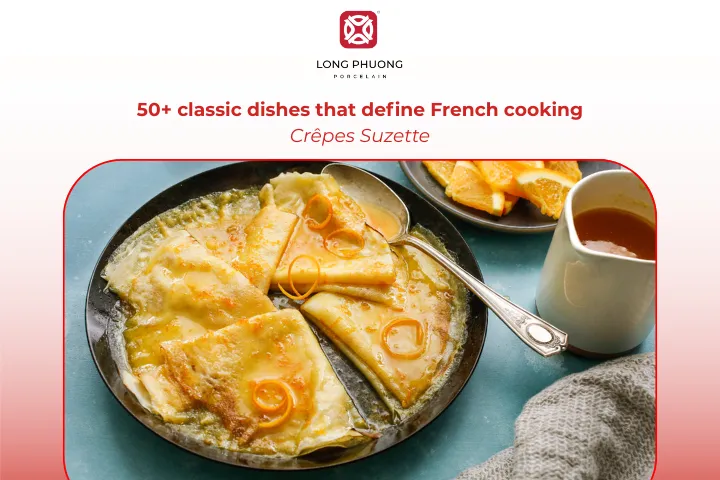
6.44. French food favourite: Crêpes Suzette
Jacques Pépin’s delicate crêpes are coated in a buttery orange sauce, stacked in a skillet, and then finished with Grand Marnier and Cognac before being flambéed. It’s a show-stopping dessert that’s sure to impress you.
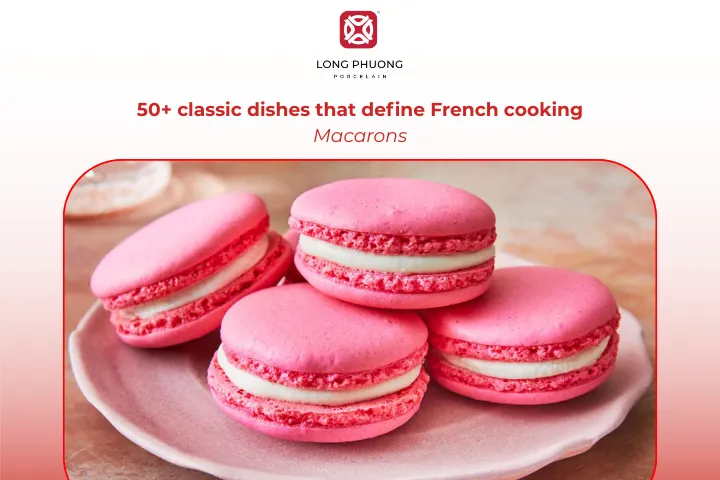
6.45. A famous French dessert: Macarons
These little treats are colorful, delicate, and perfectly sized for a quick sweet break. Made with almond flour and meringue, macarons have a soft, chewy center with a smooth, creamy filling. They are truly irresistible, especially when you sample the wide range of flavors at famous spots like Ladurée or Pierre Hermé.
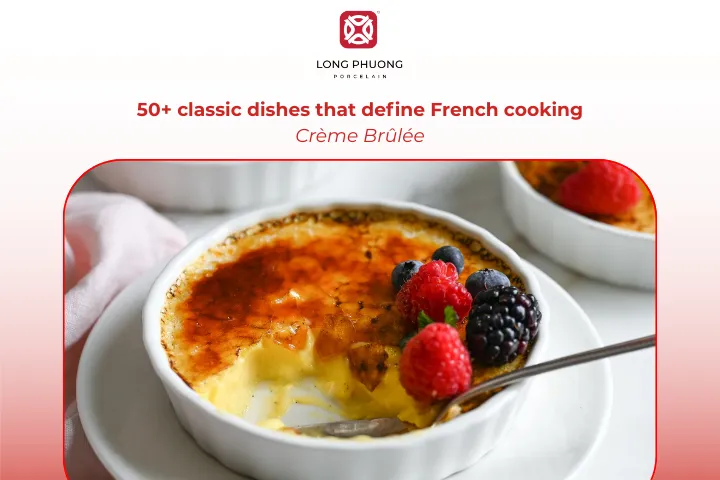
6.46. Crème Brûlée
Crème brûlée is a true French classic that never goes out of style. Its smooth, creamy custard pairs beautifully with a thin layer of crisp caramelized sugar. Simple in nature, yet impossible to resist, it remains a favorite dessert for good reason.
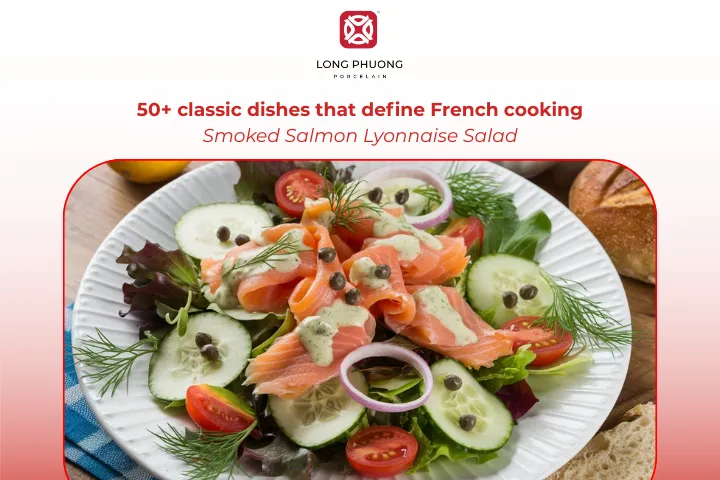
6.47. Smoked Salmon Lyonnaise Salad
Peppery baby greens are available year-round, making it easy to enjoy this classic French bistro salad anytime. Topped with boiled eggs, crispy bacon, smoked salmon, and homemade garlic croutons, the salad is perfectly balanced. A tangy dressing with caramelized shallots and Dijon mustard adds just the right amount of acidity to cut through the richness of the bacon, eggs, and salmon.
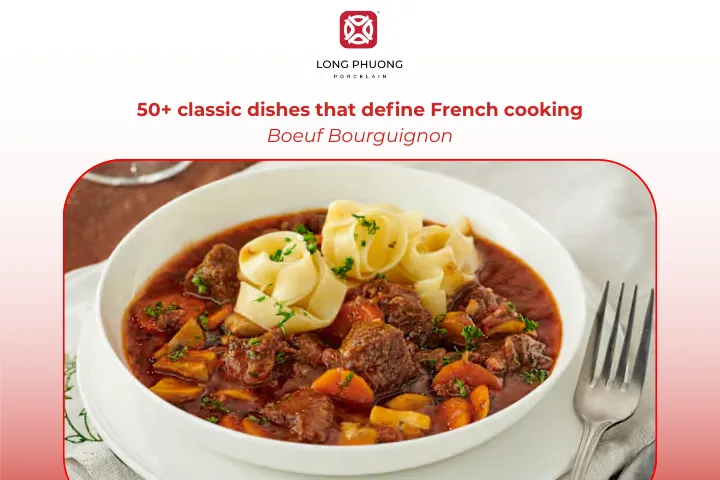
6.48. Boeuf Bourguignon: A French Classic
Boeuf Bourguignon is a traditional French beef stew from the Burgundy region, famous for its tender meat, rich sauce, and pearl onions. You can add a splash of cognac to enhance the flavor even more.
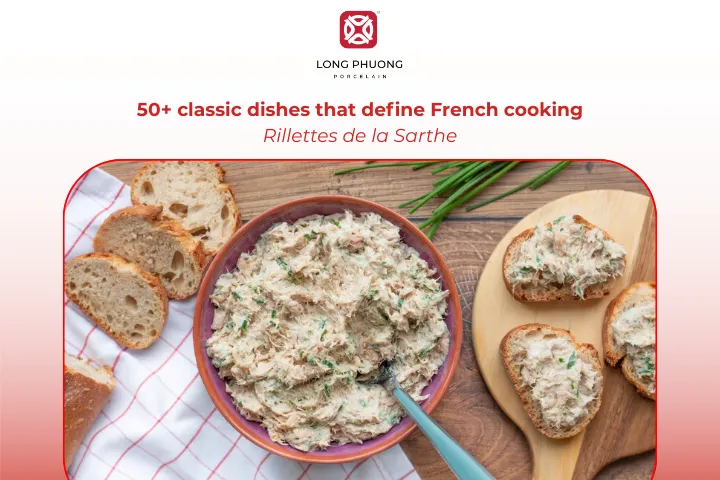
6.49. French cuisine: Rillettes de la Sarthe
If you meet someone from La Sarthe, in the Pays-de-la-Loire region, they’ll likely offer you their pride and joy: a jar of rillettes. Don’t be put off by the layer of fat on top. It helps keep the pork fresh. Beneath it, you’ll find tender, slow-cooked pieces of pork seasoned simply with salt and pepper. Enjoy them spread on a crusty baguette for apéro or in a tasty lunchtime sandwich.
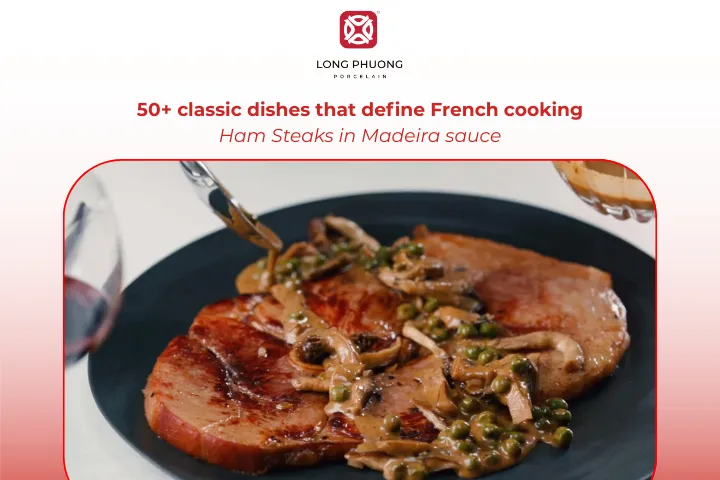
6.50. Ham Steaks in Madeira sauce
The dish is inspired by the French dish jambon à la morvandelle, where ham steaks are cooked in a mushroom and Madeira sauce. It is described as one of the quick meals for elegant dining.
7. 5 mother sauces in French cooking
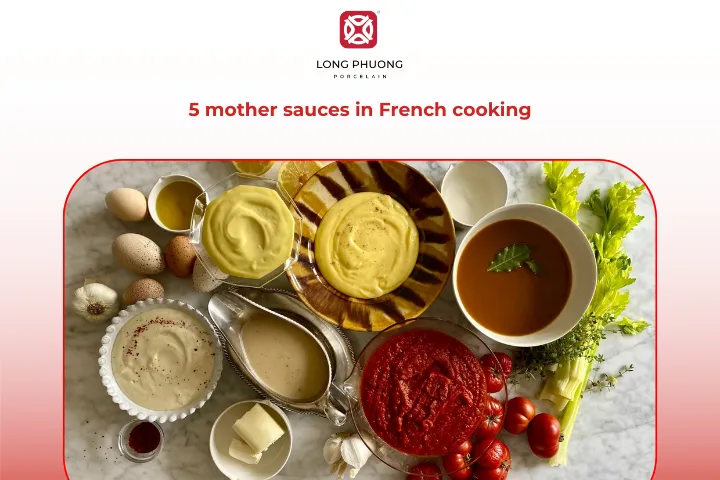
French cuisine is well known for teaching classic techniques to both professional chefs and home cooks. At the heart of this tradition are the five mother sauces, which form the base of countless dishes. Each plays a unique role in French cooking.
7.1. Béchamel
Béchamel is a creamy white sauce commonly used in baked pasta, casseroles, and savory pies. It is traditionally made by cooking flour with butter and gradually adding milk until smooth.
7.2. Velouté
Velouté is a silky sauce created by combining a light roux with vegetable, chicken, or meat stock. Its smooth texture makes it ideal for finishing meats and vegetables.
7.3. Espagnole
Espagnole is a rich brown sauce that serves as the foundation for many demi-glace sauces. It is often added to stews, soups, and meat-based dishes to deepen flavor.
7.4. Hollandaise
Hollandaise is best known as the sauce paired with eggs Benedict. Made from egg yolks, butter, and lemon juice, it has a pale yellow color and a rich, tangy taste. Modern versions sometimes include extra ingredients like mustard for added depth.
7.5. Tomato
Tomato sauce is a versatile staple in French cooking. Prepared from cooked or puréed tomatoes, it can be chunky or smooth depending on the style. It pairs well with vegetables, seafood, poultry, and meat, and can also be enriched with stock or béchamel for a creamier result.
8. Long Phuong Porcelain and the role of fine tableware in French cuisine
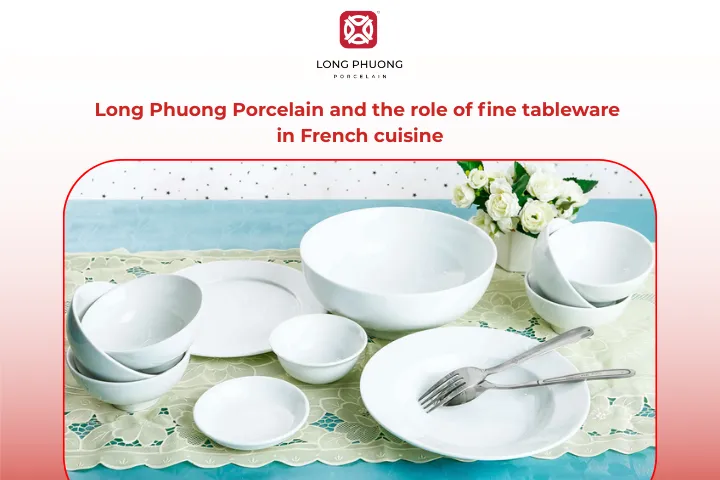
French cuisine is not only about what is served on the plate, but also how it is presented at the table. In French dining culture, tableware plays a quiet yet powerful role in elevating the entire experience. The right porcelain does not compete with the food. Instead, it frames flavors, highlights colors, and adds a sense of occasion to every meal.
Long Phuong Porcelain understands this philosophy deeply. With refined designs, balanced proportions, and a focus on craftsmanship, our porcelain collections complement the elegance that defines French cuisine. Whether used for an intimate family dinner or a formal dining setting, each piece helps transform everyday meals into moments of appreciation and connection.
Just as French cuisine values harmony between ingredients, Long Phuong Porcelain brings harmony to the table, where food, presentation, and atmosphere come together as one complete experience.
9. FAQs about French cuisine
9.1. What is traditional French food?
Traditional French food refers to dishes that have been passed down through generations and are closely tied to regional cooking. These foods often rely on local ingredients, classic techniques, and balanced flavors. Examples include stews, soups, roasted meats, baked dishes, and simple pastries. Traditional French cuisine values technique as much as ingredients.
9.2. What French food is the most popular?
Some of the most popular French foods worldwide include croissants, baguettes, French onion soup, coq au vin, boeuf bourguignon, and crêpes. These dishes are widely served both in France and internationally. Their popularity comes from their comforting flavors and recognizable preparation. Many of them are staples in bistros and home kitchens alike.
9.3. What is the staple food of France?
Bread is considered the staple food of France, especially the baguette. It is eaten daily and served with most meals. Cheese and wine are also essential elements of French cuisine, but bread remains the foundation. The importance of bread reflects France’s long tradition of baking and grain-based foods.
9.4. What is a classic French menu?
A classic French menu typically follows a structured order. It often starts with an appetizer, followed by a main dish, then a cheese course, and finally dessert. In some cases, soup or salad is included at the beginning. This structure reflects how French cuisine emphasizes pacing, balance, and enjoyment of the meal.
10. Conclusion
Long Phuong hopes this list of iconic dishes helps you appreciate how rich and diverse French cuisine truly is. These classics only scratch the surface of the many specialties found across France. Whether you enjoy them in a French bistro or try recreating them at home, each dish offers a taste of French culinary heritage. I hope your journey through French cuisine is filled with memorable meals and genuine enjoyment.

CEO of Long Phuong Group Joint Stock Company, with more than 20 years of exploration and research to obtain the best formulas and professional experience, Long Phuong Porcelain has produced more than 400 designs of all kinds of household porcelain, Significant contributions to Vietnam's ceramic industry.

