 Vietnam
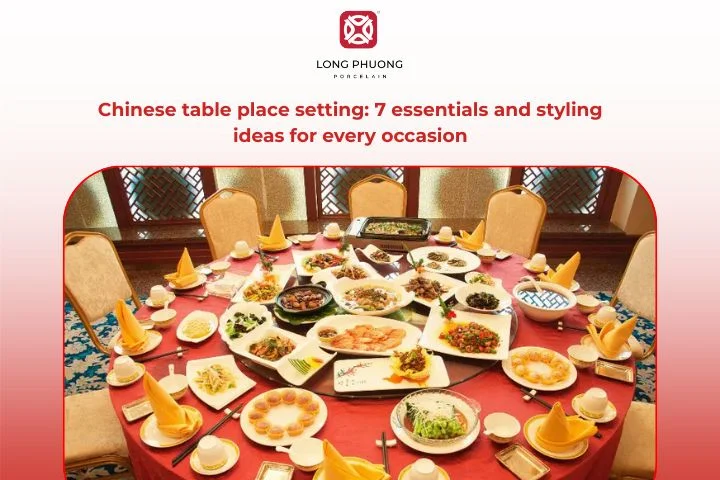
Chinese dining traditions are more than just about food, they are about connection, respect, and beauty in presentation. A well-arranged Chinese table place setting reflects harmony and hospitality, two values deeply rooted in Chinese culture. Whether you are hosting a family dinner or setting up for a festive celebration, understanding how to arrange your table the right way can elevate the entire dining experience. In this guide, Long Phuong will explore the seven essentials of Chinese table place setting, practical styling ideas for every occasion, and tips to create a beautiful, balanced dining atmosphere with porcelain tableware.
1. What is a Chinese table place setting?
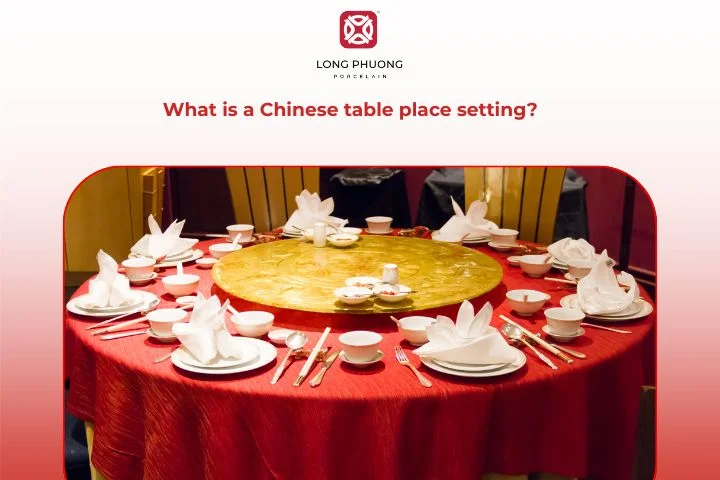
A Chinese table place setting refers to the traditional arrangement of tableware, utensils, and décor used in Chinese meals. Unlike Western settings where forks and knives dominate, the Chinese setup centers around bowls, chopsticks, soup spoons, and shared dishes.
Unlike Western settings, which focus on individual courses, the Chinese setting is designed for shared dishes. Every element plays a role in facilitating the communal experience, where food is placed in the center and enjoyed by all at the table. Mastering the art of the Chinese table place setting is key to hosting an authentic and respectful Chinese meal.
2. Why does Chinese table place setting matter in Chinese culture?
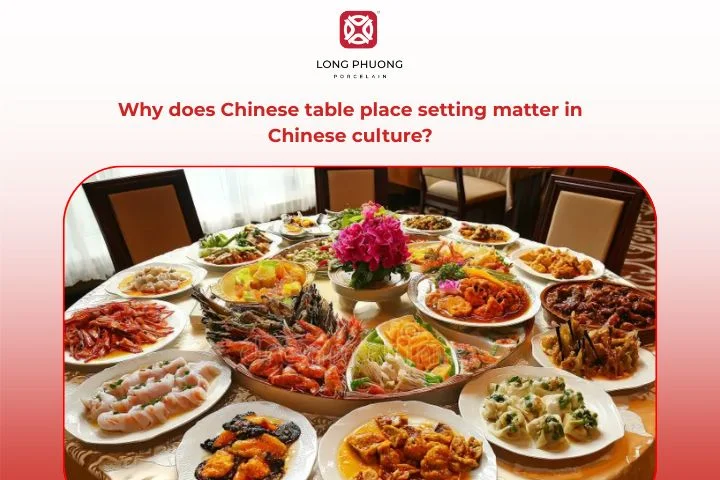
In Chinese culture, dining is not only about nourishment but also about respect and balance. A thoughtfully prepared Chinese table place setting expresses care for guests and symbolizes good fortune.
- It Shows Respect: Placing the correct utensils and seating guests according to seniority or status is a direct display of respect for the guests and the host’s attention to detail.
- It Facilitates Harmony: The round table design and the rotating Lazy Susan encourage sharing and conversation, embodying the concept of tuányuán (團圓) or family reunion and togetherness.
- It Conveys Symbolism: Colors, patterns on the porcelain, and even the placement of items (e.g., chopsticks must never be stuck upright in the rice bowl, as it resembles incense for the dead) carry symbolic meanings related to fortune, longevity, and prosperity.
- It Guides the Meal: A proper Chinese table place setting guides diners on how to partake in the many dishes, ensuring a smooth and enjoyable dining experience for everyone.
3. What are the 7 essentials to Chinese table place setting?
When preparing a Chinese table place setting, there are seven essentials you should always include. These pieces come together to create an authentic, balanced look that enhances both form and function.
3.1. Dining table and seating order
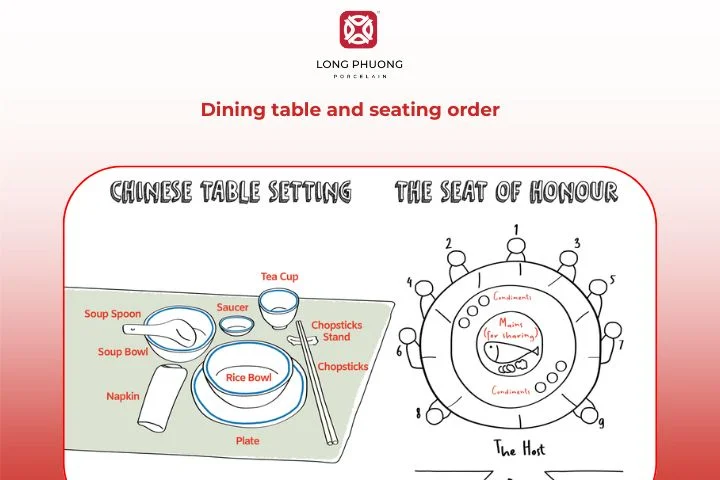
A round table is ideal for Chinese table place settings because it symbolizes equality and unity. Round shapes allow everyone to face each other and share food easily.
The seating order follows respect and hierarchy. The seat facing the entrance is for the guest of honor, followed by other guests or family members seated clockwise.
If you’re hosting at home, a sturdy porcelain dining set on a round wooden or glass table adds a touch of elegance while keeping the traditional feel.
3.2. Bowls, plates, and serving dishes
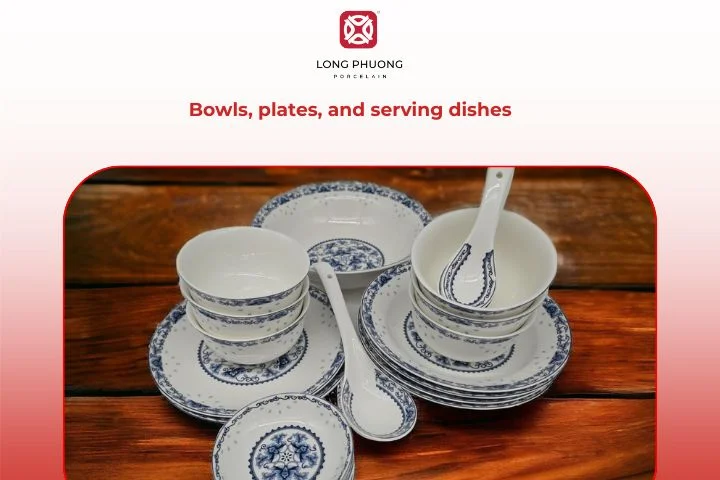
Chinese meals are typically served “family-style,” where everyone shares dishes placed in the center. Each guest has:
- One rice bowl
- One small plate for bones or condiments
- Shared serving platters and soup bowls in the middle
Porcelain is the preferred material because it maintains the temperature of food and looks refined. For a cohesive look, choose a matching porcelain dinner set with delicate motifs or minimalist white tones from Long Phuong Porcelain.
3.3. Chopsticks and holders
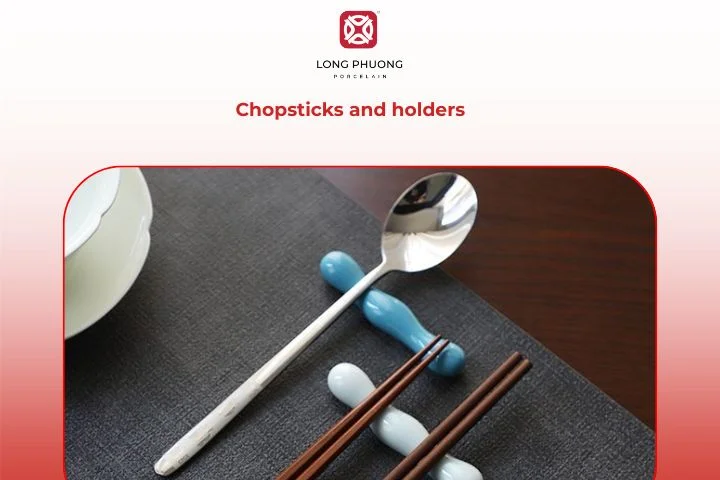
Chopsticks (Kuàizi 筷子) are the main eating utensils.
- Placement: They are placed horizontally, either resting on a chopstick rest (holder) or laid neatly across the top edge of the small plate, with the tips pointing to the left.
- The Rest (Kuàizi Jià 筷子架): A small, often ornamental holder that keeps the tips of the chopsticks from touching the table—a hygienic and polite practice.
3.4. Soup spoons and condiment bowls
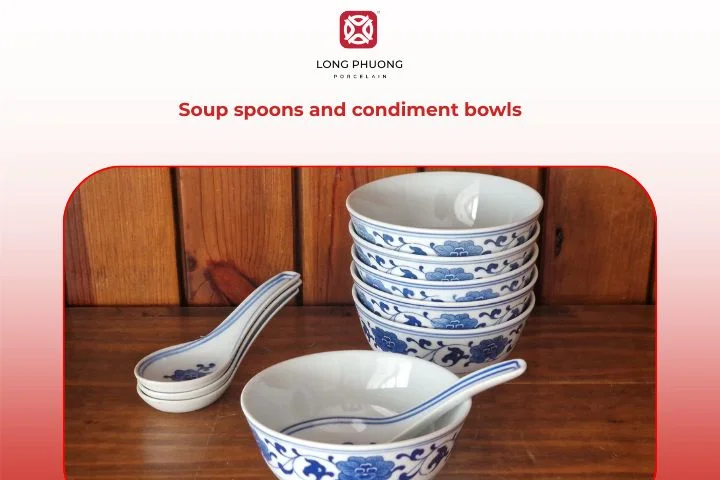
Essential for enjoying soups and sauces.
- Soup Spoons (Tāng Chi 湯匙): These are traditionally large, flat-bottomed porcelain spoons, designed for scooping soup or reaching into serving bowls. They are placed to the right of the bowl or on a separate spoon rest.
- Condiment Bowls: Tiny, shallow bowls for dipping soy sauce, vinegar, chili oil, or other condiments. These are placed slightly above the main setting.
3.5. Tea cups or beverage glasses
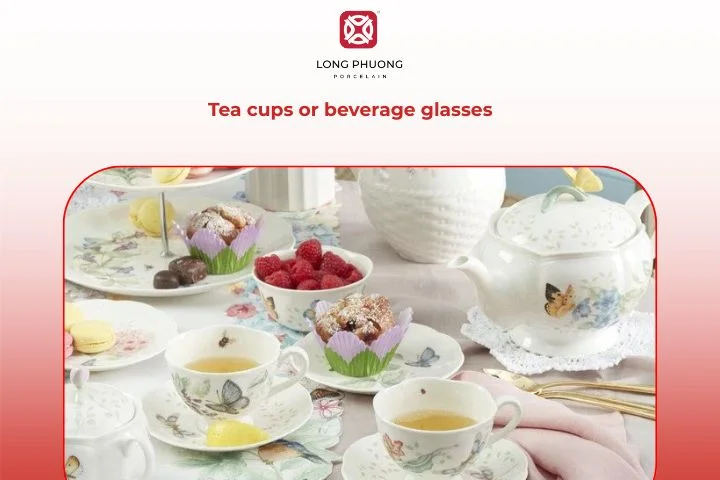
Tea is integral to any Chinese meal.
- Tea Cups (Chá Bēi 茶杯): Small, handled, or handleless porcelain cups. They are typically placed to the upper right of the setting, outside the soup spoon and condiment bowl.
- Beverage Glasses: For water, juice, or alcoholic beverages like Baijiu or wine. They are placed slightly above the teacup.
3.6. Napkins and table linens
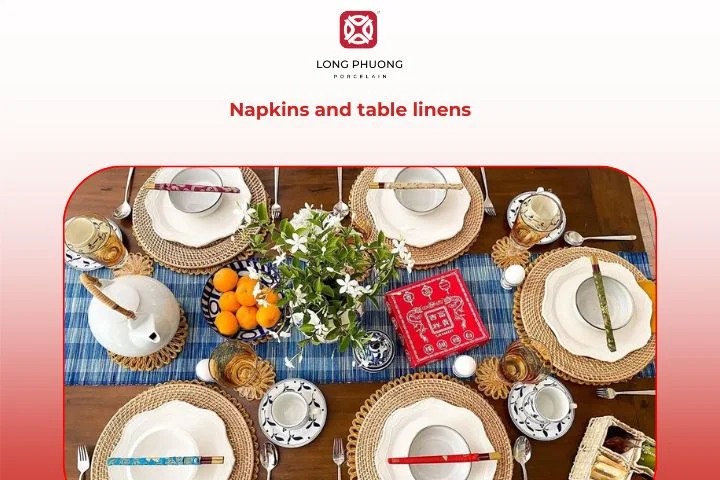
These add a layer of sophistication and cleanliness.
- Napkins: Often a simple paper napkin or a small, folded cloth napkin. It is typically placed to the left of the setting or sometimes artistically folded and placed inside the rice bowl before the guests arrive.
- Table Linens: A clean tablecloth, usually a solid color or a tasteful pattern, forms the backdrop for the beautiful porcelain setting.
3.7. Centerpiece and symbolic decor
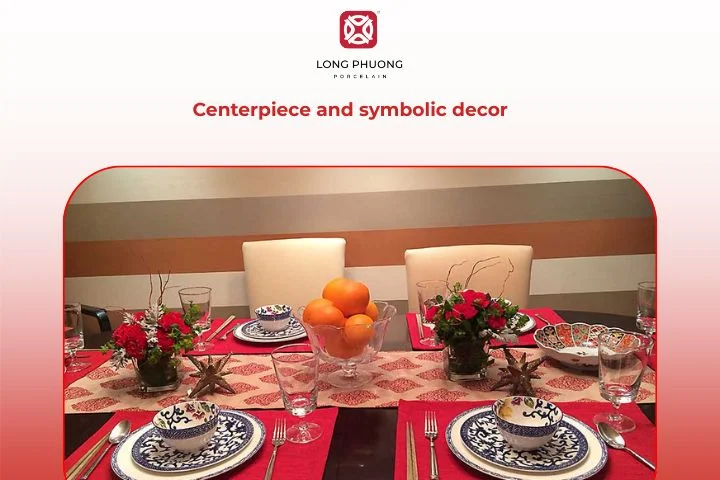
A final touch that ties the whole setting together.
- Centerpiece: Should be tasteful but low enough not to obstruct views or access to the Lazy Susan. Fresh flowers or a decorative porcelain vase are common.
- Symbolic Decor: For festive occasions, items like red lanterns, calligraphy scrolls, or small figurines representing good fortune (e.g., dragons, phoenixes) are included. The color red is dominant for celebrations.
4. Chinese table place setting ideas for dining table
The formality of a Chinese table place setting can be adjusted based on the occasion.
4.1. Everyday family dining
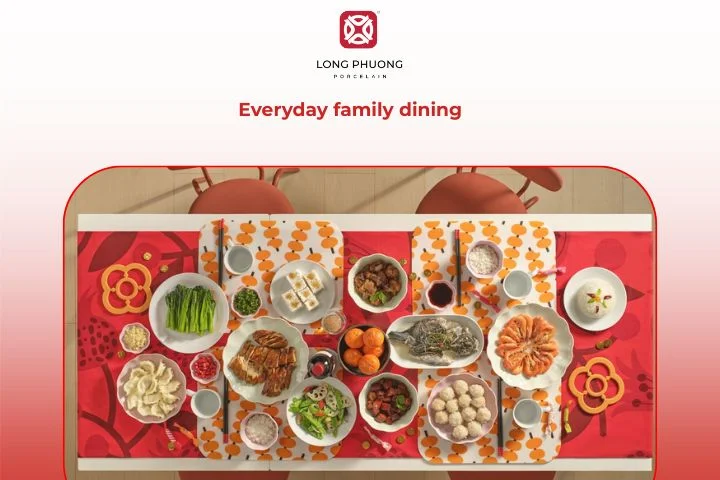
This setting is functional, minimalist, and focuses on ease of use.
- Simplified Setup: Only the absolute essentials: rice bowl, chopsticks (often without a rest, placed directly on the bowl), a teacup, and a main serving plate for any immediate appetizers.
- Focus on Durability: Use durable, simple porcelain that can withstand daily use and frequent washing. White or light-colored plain porcelain is popular for its versatility.
- Informal Seating: Seating is relaxed; typically, parents or grandparents sit in the most prominent spots.
See more: best dining table sets for 6: perfect for family meals
4.2. Casual home dinner with friends
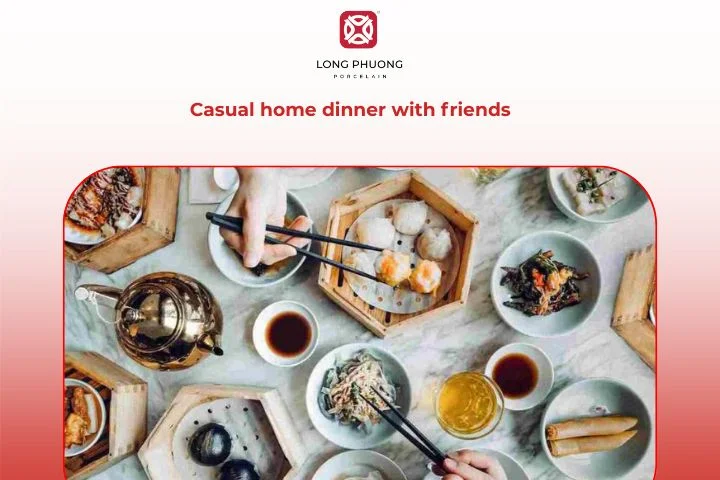
When entertaining friends, play with color and texture. Try porcelain plates with floral or geometric designs, cloth napkins, and a few candles for ambiance.
Serving shared dishes in Long Phuong porcelain platters instantly adds charm while staying true to traditional Chinese hospitality.
5. Chinese table place setting ideas for party
For festive occasions, your table should feel celebratory and full of energy.
5.1. Festive and holiday party
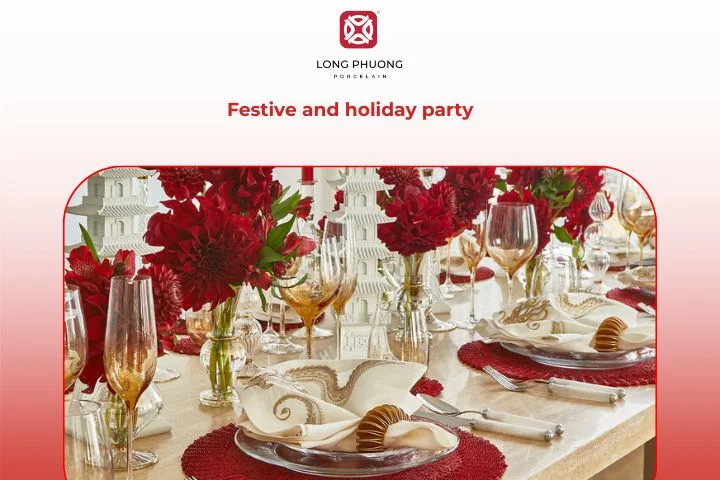
During festivals, red and gold dominate because they represent good luck and wealth. Use a red table runner with gold napkin rings, and arrange porcelain plates in layers for a luxurious look.
Adding small fortune ornaments or chopstick rests shaped like coins or fish can bring symbolic meaning to the party.
5.2. Chinese New Year celebration
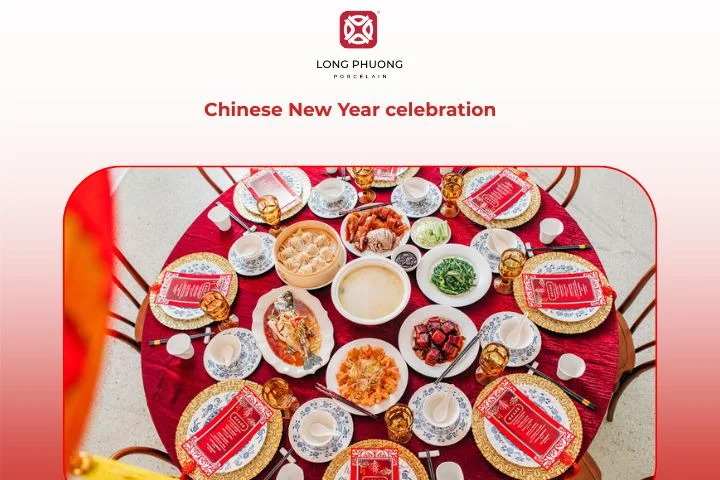
For Chinese New Year, every detail carries meaning. Choose porcelain dinnerware with dragon, phoenix, or peony motifs for prosperity.
Set the table with round plates, red napkins, and a decorative centerpiece of oranges or tangerines to invite good fortune. Long Phuong Porcelain’s New Year collection offers timeless, festive designs ideal for family gatherings.
6. Formal Chinese table place setting ideas
Formal occasions, such as business meetings or weddings, demand the highest level of etiquette and elegance.
6.1. Business or wedding banquet
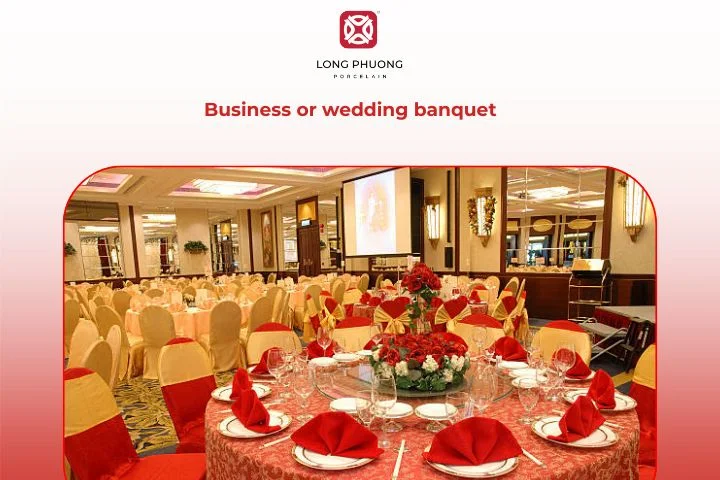
The epitome of structured elegance, where every detail matters. This is the classic, most rigid Chinese table place setting.
- High-End Porcelain: Use premium, fine bone china or high-fired porcelain. The sets should be completely uniform and pristine.
- Dual Chopsticks: It is common to have two sets of chopsticks: a longer, different-colored pair for serving (communal) and a personal pair for eating. The personal pair is on the rest, and the communal pair is placed near the serving dishes.
- Formal Linen: Starched, perfectly ironed white or cream tablecloths and perfectly folded napkins are required.
- Wine Glasses: Both a water/soft drink glass and a formal wine or Baijiu glass are included, often placed in a precise geometric pattern above the teacup.
6.2. Modern luxury dinner setup
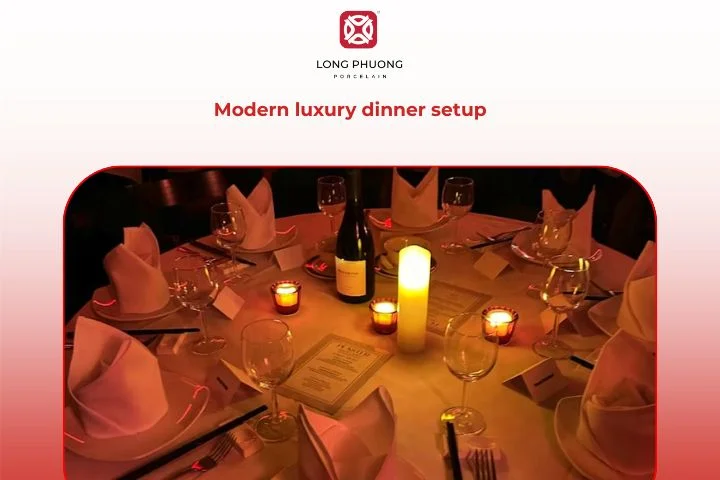
Modern interpretations blend Chinese traditions with minimalist aesthetics. Use monochrome porcelain tableware white, black, or gray with gold or bamboo accents:
- Minimalist Design: Focus on clean lines and sophisticated, modern porcelain designs. Matte black, slate gray, or pure white porcelain can replace traditional patterns.
- Integration: The setting might subtly incorporate a Western-style fork/knife (for non-Chinese guests or fusion dishes) alongside the chopsticks, creating a refined blend.
- Artistic Presentation: The food itself becomes part of the decor. The porcelain must complement the presentation of each dish.
7. Tips for a beautiful and harmonious Chinese table setting
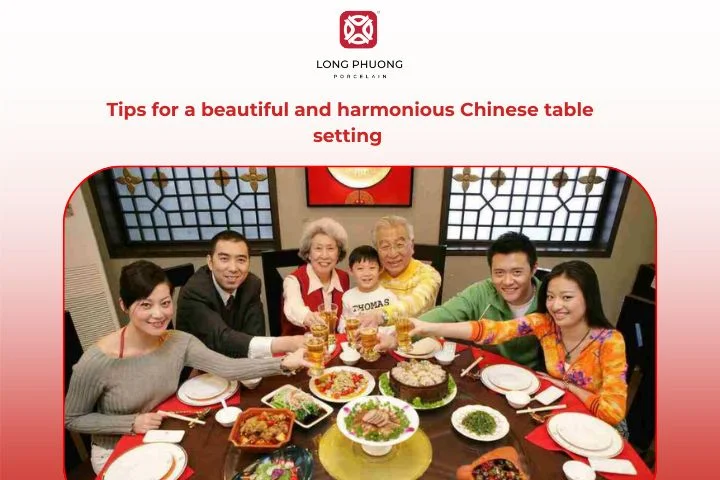
Creating an appealing and functional Chinese table place setting involves attention to a few key tips:
- Keep it Proportional: Ensure the tableware suits the size of the table. A small dish on a huge table looks lost, and oversized dishes on a small table look cluttered.
- Use Odd Numbers for Flowers: When using floral centerpieces, opt for an odd number of stems (3, 5, 7) as this is considered more visually balanced and lucky in Chinese culture.
- Mind the Chopstick Etiquette: Never point the tips of the chopsticks directly at a guest. Never stick them vertically in the rice bowl. Always use a rest if possible.
- Balance Color and Pattern: If the porcelain has a busy pattern (e.g., dragons or florals), use a simple, solid-colored tablecloth to balance it. If the porcelain is plain white, use a decorative linen.
- Always Provide a Serving Utensil: For every shared dish, ensure there is a communal serving spoon, ladle, or pair of serving chopsticks. This is crucial for hygiene and etiquette.
- Pre-Warm the Teacups: If serving hot tea, warm the teacups slightly beforehand. This enhances the tea-drinking experience.
8. FAQs
8.1. What are the five four basic types of table setting?
The four basic types of table setting, generally referenced in Western dining, are:
1. Basic (Casual): Everyday meals.
2. Informal: Three-course meals, slightly elevated.
3. Formal: Multi-course, high-end dining (requires more flatware).
4. Five-Piece Formal (Banquet): The most complex, for very large or elaborate dinners.
In Chinese dining, the settings are generally categorized as Everyday, Casual/Party, and Formal/Banquet.
8.2. What are the rules for Chinese table setting?
Follow hierarchy for seating, avoid pointing chopsticks at others, and ensure dishes are evenly distributed. Respect and harmony guide every aspect of the arrangement.
8.3. Why are round tables common in Chinese dining culture?
Round tables are common because the shape symbolizes unity, completeness, and equality (tuányuán – family reunion). They also make it easier for everyone to access and share the many dishes placed in the center, especially with the aid of a Lazy Susan.
8.4. How should chopsticks be placed properly?
Proper placement is horizontal, either resting on a designated chopstick rest or neatly across the small plate. The eating end should point to the left. They should never be crossed or stuck upright in the rice bow.
What are some affordable DIY ideas for Chinese-themed table décor?
You can use red napkins, fresh flowers, and simple porcelain vases for an elegant Chinese-inspired look without spending much.
9. Where to buy high-quality chinese porcelain table sets
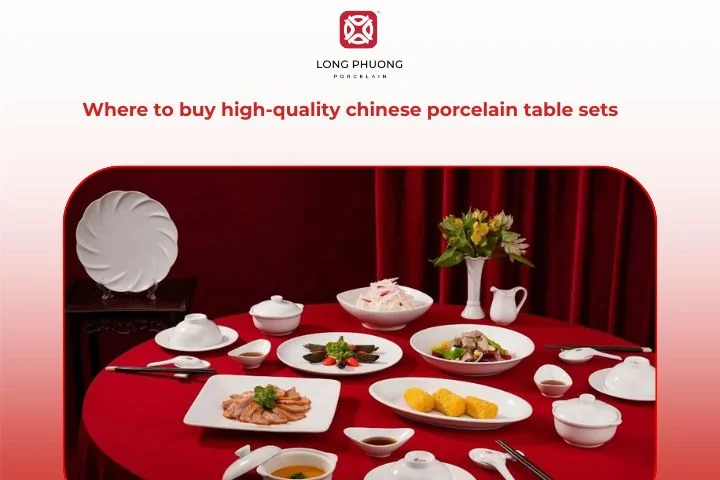
A perfect Chinese table place setting relies on the quality of its components. Investing in high-quality porcelain is crucial for durability, aesthetic appeal, and cultural authenticity.
For a blend of traditional craftsmanship and modern excellence, consider Long Phương Porcelain.
Long Phương Porcelain specializes in creating stunning, high-fired, white porcelain tableware designed for both everyday use and the most formal banquet. Our products are recognized internationally for their:
- Durability and Chip Resistance: Perfect for daily use, standing up to the demands of large gatherings and commercial dining.
- Lead-Free and Non-Toxic Glaze: Ensuring safety and purity with every meal.
- Elegant Designs: From classic, clean white sets that serve as the ideal backdrop for any cuisine to subtly decorated pieces that fit a modern luxury aesthetic.
Whether you are seeking the perfect rice bowls for your everyday family dinners, robust serving platters for your next festive party, or a complete, elegant set for a formal business banquet, Long Phuong Porcelain provides the foundation for an unforgettable and authentically styled Chinese meal.
Related articles

CEO of Long Phuong Group Joint Stock Company, with more than 20 years of exploration and research to obtain the best formulas and professional experience, Long Phuong Porcelain has produced more than 400 designs of all kinds of household porcelain, Significant contributions to Vietnam's ceramic industry.

